- Global Supply | Worldwide Delivery

Spectra conveyor components are used to support, guide, drive, and control material-handling systems. Each component has a specific role in maintaining smooth conveyor movement. Therefore, the correct combination of rollers, pulleys, brackets, bearings, shafts, and other parts should be selected according to the conveyor design and operating conditions.
A conveyor system may handle bulk materials, packaged goods, minerals, aggregates, or industrial products. Because operating conditions vary, components should be matched with the belt width, load, speed, material characteristics, and installation environment. For example, Conveyor Rollers can be selected according to the load and conveying arrangement, while Conveyor Bracket Set supports the roller assembly.
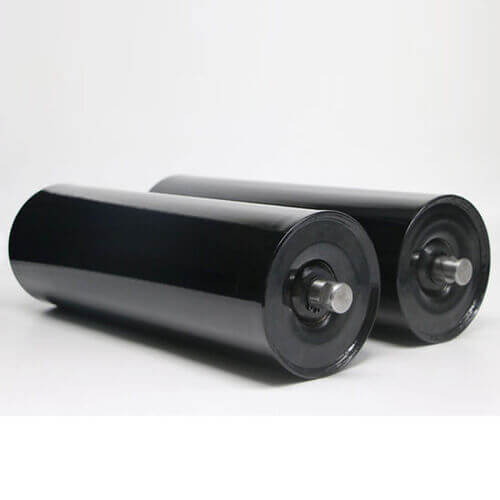
Share Your Conveyor Roller Requirements With Us and Get the Best Price, Tailored to Your Needs. Our Team Will Respond Quickly With a Competitive Quote.
Carrying rollers support the loaded belt on the conveying side. They are normally arranged in a troughing configuration when bulk materials are transported.
The roller diameter and spacing influence belt support and belt sag. Therefore, heavier loads generally require suitable roller spacing and an appropriate roller construction.
For standard conveying applications, a Carrying Roller can be selected according to belt width, loading conditions, and conveyor arrangement.
Return rollers support the empty belt after the material has been discharged. Since the return side normally carries less load, its roller arrangement can differ from the carrying side.
However, alignment remains important. If a return roller is incorrectly positioned, belt tracking problems may develop. Therefore, the roller should be installed perpendicular to the conveyor centreline.
Return Rollers are commonly used for this part of the conveyor system.
Material falling onto a conveyor can create a concentrated impact load. This load can be transferred directly to the belt and supporting structure.
Impact rollers are therefore installed in loading zones to reduce the effect of material impact. Rubber discs or other energy-absorbing arrangements may be used depending on the design.
Impact Rollers are suitable for applications where heavy or irregular material is loaded onto the belt.
A conveyor drum pulley transfers rotational force to the belt or changes the direction of belt movement. The pulley diameter, shaft design, lagging arrangement, and bearing support should be matched with the conveyor requirements.
The pulley is also exposed to belt tension and torque. Consequently, its shaft and supporting structure must be designed for the expected operating load.
A Conveyor Drum Pulley can be incorporated into systems where controlled belt drive or belt redirection is required.
Brackets provide mechanical support for rollers and help maintain the intended roller position. They must be compatible with the roller dimensions and conveyor frame.
Moreover, proper bracket alignment helps prevent uneven belt loading and unnecessary roller wear.
A Conveyor Bracket can be used where individual roller support is required, while a Conveyor Bracket Set can be used for an assembled support arrangement.
| Component Type | Carrying Roller, Return Roller, Impact Roller, Pulley, Bracket and Idler Assembly |
| Roller Diameter | 60 mm, 76 mm, 89 mm, 102 mm, 108 mm, 114 mm, 127 mm, 133 mm and 159 mm |
| Shaft Diameter | 20 mm, 25 mm, 30 mm, 35 mm and 40 mm |
| Roller Face Width | Approximately 300 mm to 1800 mm, depending on conveyor width and design |
| Belt Width | Approximately 400 mm to 2000 mm for common industrial conveyor arrangements |
| Roller Spacing | Approximately 300 mm to 1200 mm, selected according to load and belt conditions |
| Troughing Angle | 20°, 35° and 45° commonly used for troughed belt conveyor arrangements |
| Typical Belt Speed | Approximately 0.5 to 5 m/s, depending on conveyor application and material |
| Roller Material | Carbon steel, mild steel, stainless steel or HDPE, depending on application |
| Bearing Type | Sealed deep-groove ball bearings commonly used for conveyor roller assemblies |
The component material should be selected according to the operating environment.
Steel components are commonly used where high mechanical strength is required. Mild steel can be suitable for general industrial applications, provided the operating environment does not demand higher corrosion resistance.
For corrosive or hygienic environments, stainless steel may be preferred. Likewise, polymer-based rollers can be considered where reduced weight, corrosion resistance, or specific material-handling characteristics are required.
For example, an SS Conveyor Roller can be considered for applications where stainless-steel construction is required. Similarly, an HDPE Roller may be considered where polymer construction is appropriate.
The load carried by each roller depends on several factors. These include material weight, belt width, roller spacing, conveyor inclination, loading condition, and the number of rollers supporting the belt.
A simplified engineering approach can be used to estimate the load carried by an individual roller:
Approximate roller load = Supported conveyor load ÷ Number of effective supporting rollers
However, this relationship is only an approximation. In actual conveyors, load distribution is affected by belt stiffness, troughing geometry, material distribution, roller alignment, and dynamic loading.
Therefore, the calculated value should not be treated as the complete design load without considering the actual conveyor conditions.
Belt speed affects roller rotational speed. As belt speed increases, the roller must rotate faster to maintain the required surface movement.
For a roller diameter D and belt speed V, the approximate rotational speed can be expressed as:
RPM = (60 × V) / (π × D)
where:
For example, increasing belt speed while keeping the roller diameter unchanged will increase the roller RPM. Therefore, bearing selection and rotational performance should be considered for high-speed conveyors.
A Belt Speed Calculator can also be used when checking belt-speed relationships.
Bearings allow rollers and other rotating components to operate with reduced friction. The bearing should be selected according to the radial load, rotational speed, operating temperature, contamination level, and expected service conditions.
Dust and moisture can affect bearing life. Consequently, sealing arrangements are particularly important in mining, quarrying, aggregate handling, and outdoor conveyor applications.
A properly selected bearing should also fit the shaft and roller assembly accurately. Incorrect bearing dimensions can result in excessive clearance, overheating, vibration, or premature failure.
The shaft transfers load between the roller body, bearings, and supporting structure. It may also be subjected to bending and shear forces.
Shaft diameter should therefore be selected according to the expected load, span, material strength, bearing arrangement, and mounting configuration.
For heavier conveyor applications, a larger shaft may be required. However, increasing shaft diameter also affects component weight and manufacturing requirements. Therefore, the shaft should be sized based on engineering calculations rather than selected arbitrarily.
Conveyor width directly affects component dimensions. Roller length should provide adequate belt support while maintaining sufficient clearance from the conveyor structure.
The selected roller should also match the troughing arrangement and bracket geometry. If the roller length or mounting dimension is incorrect, installation and belt tracking may be affected.
Before components are specified, the following dimensions should therefore be confirmed:
The working environment should be considered before selecting Spectra conveyor components.
Mining and quarrying conveyors may be exposed to abrasive dust, heavy impact, moisture, and irregular material loading. In contrast, food, chemical, or clean-process applications may require different material and surface considerations.
Temperature is another important factor. Components exposed to high or low temperatures may require materials, seals, lubricants, or construction methods suited to those conditions.
Therefore, component selection should always consider the actual plant environment rather than relying only on nominal conveyor specifications.
The selection process should begin with the conveyor operating conditions. First, identify the belt width, conveyor speed, material characteristics, and expected load. Next, determine the roller arrangement, shaft dimensions, bearing requirements, and mounting configuration.
After that, evaluate the environment. Dust, moisture, temperature, chemicals, and impact can all influence component selection.
Finally, verify that the selected components are compatible with the existing conveyor structure.
A Conveyor Roller Selection Guide can be useful when reviewing roller-related selection parameters.
A conveyor system works as a combination of mechanical components. Therefore, one incorrectly selected component can affect the performance of the complete system.
For instance, an unsuitable roller may increase belt resistance. Likewise, incorrect bearing selection can increase maintenance requirements. Poor bracket alignment can also contribute to belt tracking problems.
When each component is matched to the conveyor design, smoother operation can be achieved. In addition, maintenance intervals can be managed more effectively.
Mining conveyors commonly handle heavy and abrasive materials. Therefore, robust rollers, suitable impact protection, correctly selected bearings, and strong supporting structures are required.
Cement and aggregate plants can generate substantial dust and material impact. Components should consequently be selected with suitable sealing, structural strength, and impact resistance.
Stone-crushing systems expose conveyor components to heavy material impact and abrasive particles. Stone Crusher Rollers can be considered where roller construction is required for such applications.
General industrial conveyors may transport cartons, bags, packaged products, or bulk materials. In these systems, component selection can be based on load, speed, conveyor width, and the type of material being conveyed.
First, check whether the roller is blocked by material build-up. Then inspect the bearing for contamination, wear, or seizure. If the roller remains difficult to rotate, it should be removed and inspected before the conveyor is returned to service.
Unusual noise can indicate bearing wear or poor alignment. Therefore, stop the conveyor when it is safe to do so and inspect the roller. In addition, check whether the shaft and mounting brackets are correctly positioned.
Belt tracking problems can occur when rollers are misaligned. First, inspect the carrying and return roller alignment. Next, check the pulley position and remove any material build-up. As a result, correct alignment can help restore stable belt tracking.
Excessive vibration may be caused by a damaged roller, worn bearing, bent shaft, or uneven material loading. Therefore, inspect the complete roller assembly instead of replacing the bearing immediately.
A hot bearing can result from excessive load, contamination, incorrect installation, or insufficient lubrication where lubrication is applicable. First, check the operating load and bearing condition. If overheating continues, the bearing and shaft arrangement should be inspected.
Share Your Conveyor Roller Requirements With Us and Get the Best Price, Tailored to Your Needs. Our Team Will Respond Quickly With a Competitive Quote.
Spectra Conveyor Components are mechanical components used in conveyor systems to support, guide, drive, and control belt movement. They can include rollers, pulleys, brackets, bearings, shafts, and related assemblies.
The main factors include belt width, material load, belt speed, roller diameter, shaft diameter, roller spacing, conveyor arrangement, and operating environment. In addition, dust, moisture, temperature, and impact should be considered.
Rollers can fail because of bearing wear, excessive loading, contamination, misalignment, material build-up, or damaged shafts. Therefore, regular inspection can help identify problems before they become serious.
Correct component selection, proper alignment, suitable loading, and regular maintenance can improve roller service life. Moreover, bearings should be protected from dust and moisture where required.
Impact rollers are installed in loading zones where material falls onto the conveyor belt. They help support the belt and reduce the effect of concentrated impact loading.
There is no single roller diameter for every conveyor. The required diameter depends on belt width, load, speed, roller spacing, and conveyor design. Therefore, the diameter should be selected according to the application.