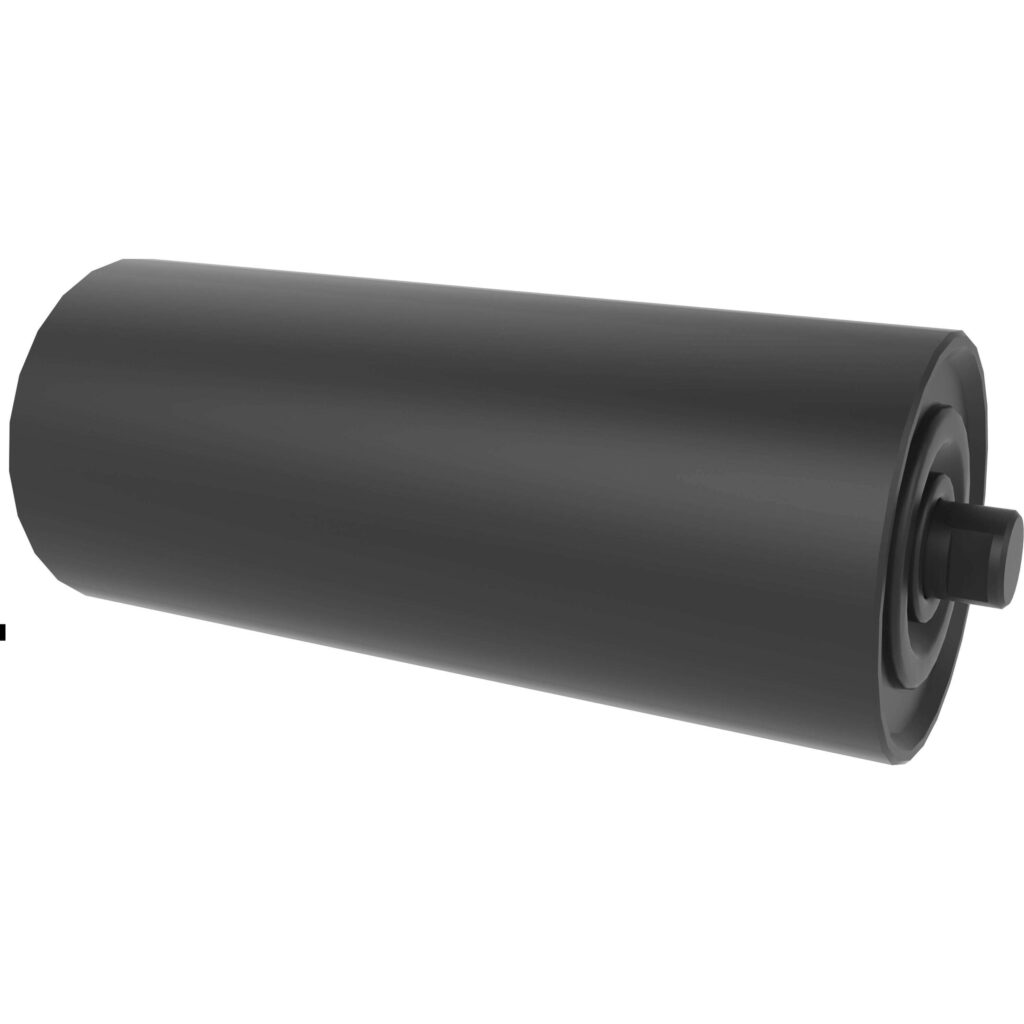
Return rollers support the empty side of the conveyor belt and help maintain proper belt alignment during continuous operation. Designed for dependable performance, our return rollers are available in robust configurations to suit different belt widths, operating conditions, and material-handling applications.
ENGINEERED FOR PERFORMANCE
Engineered For Smooth Running • Reduced Belt Wear • Long Service Life
Request For Quote
NEED A CUSTOM QUOTE?
Get the Right Price for Your
Conveyor Roller
Share Your Conveyor Roller Requirements With Us and Get the Best Price, Tailored to Your Needs. Our Team Will Respond Quickly With a Competitive Quote.
Technical Details
01
Tube Construction
Tube Diameter: 89–159 mm
Tube Wall Thickness: 3.0–6.0 mm
Material: Carbon Steel / HDPE
Surface: Painted / Galvanized / Bare Steel
02
Shaft Design
Shaft Diameter: 20–40 mm
Shaft Material: EN8 / Carbon Steel
Typical Shaft Length: 150–300 mm
Machining: Precision-machined mounting ends
03
Bearing System
Bearing Range: 6204–6310
Bearing Type: Deep Groove Ball Bearing
Sealed Bearing: 2RS / equivalent
Design Life: L10 ≥ 30,000 hours
Bearing Load Rating: 12.7–61.8 kN, depending on bearing size
Suitable For: Dusty, abrasive and outdoor conveyor environments
06
Operating Load
Typical Return Idler Load: 180–550 kg per roller
Heavy-Duty Configurations: Up to ~800 kg+, depending on design
Belt Speed: Up to 6 m/s
Operating Temperature: −15°C to +70°C
Load Capacity: Selected according to belt width, spacing and conveyor du
Return Roller Selection Tool
Return Roller Calculator
Enter your conveyor details and click Calculate to receive an indicative return roller load and recommended roller configuration.
Calculated Return Roller Selection
Estimated Static Load / Roller
—
Design Load / Roller
—
Recommended Roller Diameter
—
Suggested Shaft Diameter
—
Recommended Spacing
—
Selection Status
—
Indicative engineering calculation for preliminary selection only. Final roller diameter, shaft, bearing and spacing should be verified against the complete conveyor design, applicable standards and manufacturer load ratings.
Troubleshooting
A quick diagnostic path for common conveyor roller issues.
1
Roller does not rotate freely
Inspect bearings, contamination, shaft alignment, seals and excessive loading.
2
Bearing becomes noisy
Check bearing condition, fit, contamination, sealing and operating load.
3
Roller seizure
Inspect the bearing system and identify contamination, overload, misalignment or sealing problems.
4
Uneven wear
Check belt tracking, loading distribution, roller alignment and material buildup.
5
Belt damage near roller
Inspect for seized rollers, damaged tube surfaces, sharp edges and incorrect installation.