- Global Supply | Worldwide Delivery

Conveyor Rollers are designed to support, transport, guide, and handle conveyed loads across different conveyor systems. Select the right roller based on roller diameter, tube length, shaft size, bearing type, load capacity, belt speed, and operating conditions.
Our conveyor roller range can be configured for different load conditions, conveyor layouts, operating speeds, and material-handling applications, with technical selection based on the required roller dimensions and operating conditions.
In addition, conveyor rollers help support the belt and maintain smooth material movement. They are designed for different loads, belt speeds, and operating conditions. As a result, selecting the right roller can improve conveyor efficiency and help reduce unnecessary belt wear.
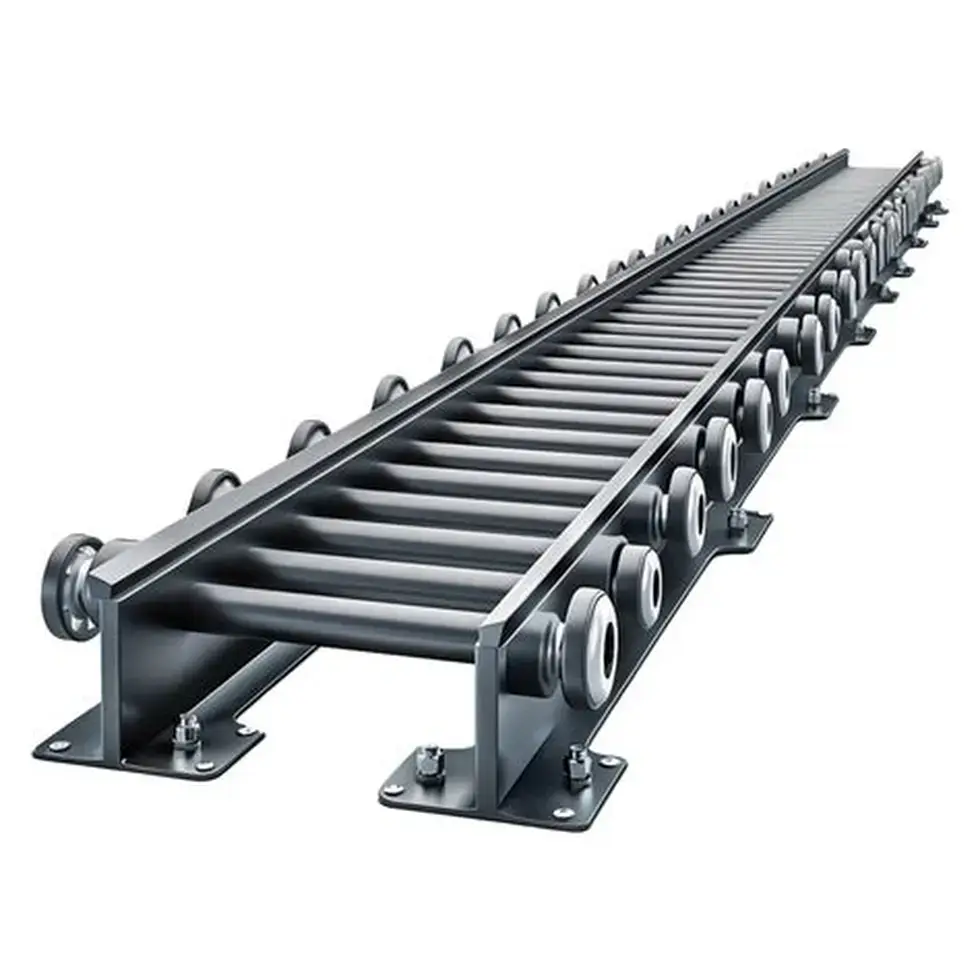
Conveyor rollers are rotating cylindrical components used to support, carry, guide, or move materials within conveyor systems. They are commonly used in belt conveyors, roller conveyors, material handling equipment, and bulk material conveying applications.
A conveyor roller typically consists of a roller tube, shaft, bearings, bearing housing, and sealing arrangement. The dimensions and construction of each component are selected according to the required load, conveyor speed, roller spacing, material characteristics, and operating environment.
Correct roller selection depends on factors such as roller diameter, tube length, shaft diameter, bearing type, load capacity, rotational speed, and surface configuration.
For detailed information on conveyor roller construction, specif “`
Different conveyor systems require different roller constructions based on load, belt arrangement, material, speed, and operating conditions. Explore the main conveyor roller types below to identify the suitable configuration for your application.
Used in conveyor loading zones to support the belt where bulk material is transferred onto the conveyor.
View Impact Rollers →Support the return side of the conveyor belt and maintain the belt path between conveyor sections.
View Return Rollers →Support the loaded conveyor belt and are selected according to belt width, load, speed, and conveyor arrangement.
View Carrying Rollers →Stainless steel rollers selected for applications requiring stainless steel construction and suitable material compatibility.
View SS Conveyor Rollers →Polymer-based conveyor rollers designed for applications where HDPE roller construction is specified.
View HDPE Rollers →Mild steel conveyor rollers for conveyor systems where MS tube and component construction is required.
View MS Conveyor Rollers →Share Your Conveyor Roller Requirements With Us and Get the Best Price, Tailored to Your Needs. Our Team Will Respond Quickly With a Competitive Quote.
A conveyor roller is made up of several components that work together to provide controlled rotation and support for the conveyed load. In addition, the construction is selected according to the roller application, load, speed, conveyor arrangement, and operating environment. Therefore, each component plays an important role in achieving reliable and consistent conveyor operation.
1. Roller Tube
The cylindrical outer body of the roller. For example, tube material, diameter, and wall thickness are selected according to the application and required load.
2. Shaft
The shaft provides the mounting connection and supports the roller assembly. Furthermore, shaft diameter and end configuration depend on the conveyor frame and loading conditions.
3. Bearings
Bearings allow the roller tube to rotate around the shaft while supporting the applied radial load. As a result, suitable bearing selection helps maintain smooth and reliable roller rotation.
4. Sealing Arrangement
The sealing arrangement helps protect the bearing area from dust, moisture, and other contaminants. Therefore, the sealing configuration should be selected according to the roller design and operating environment.
Roller Diameter: Determines the roller circumference and rotational speed at a given belt speed. In addition, the diameter can influence roller load capacity and service conditions.
Tube Thickness: Influences the structural capacity of the roller tube. For this reason, the appropriate thickness should be selected according to the expected operating load.
Shaft Diameter: Selected according to the applied load, span, mounting arrangement, and shaft configuration. Consequently, the shaft must provide adequate support for the complete roller assembly.
Bearing Selection: Depends on the expected radial load, rotational speed, sealing requirements, and operating environment. Therefore, selecting the correct bearing arrangement is important for smooth rotation and dependable service.
Key dimensions and operating parameters used for conveyor roller selection.
60, 76, 89, 108, 133, 159 mm
Application and conveyor width dependent
Selected according to load and mounting
Based on tube diameter and applied load
Selected for shaft, load and speed
Used to determine roller rotational speed
Calculated from belt speed and diameter
Determined from load and belt support
Roller selection requires checking both the load carried by each roller and the rotational speed generated by the conveyor belt. In addition, these factors help determine whether the selected roller is suitable for the operating conditions.
Therefore, these calculations help determine suitable roller diameter, bearing selection, roller spacing and shaft dimensions for the conveyor application.
V = belt speed in m/s
D = roller diameter in metres
In general, load per roller depends on total material load, load distribution and the number of rollers supporting the conveyed material.
Furthermore, increasing the diameter increases roller circumference and reduces RPM at the same belt speed.
As a result, bearing selection should account for the calculated roller RPM and the expected radial load.
Conveyor rollers support and guide conveyor belts and transported materials across different material handling systems. In addition, roller construction and selection depend on belt width, material load, belt speed, roller spacing and operating environment. Therefore, the roller configuration should be selected according to the specific conveyor requirements.
For example, conveyor rollers are used for transporting bulk materials such as aggregates, minerals, coal and other handled materials on belt conveyor systems.
Similarly, roller assemblies are selected according to conveyor load, belt width, operating speed and the material being conveyed. As a result, the roller configuration can vary between different mining and quarry applications.
Furthermore, conveyor rollers are used in production lines, transfer systems and general material handling equipment. They help provide controlled movement and support throughout the conveying process.
In addition, rollers can be used in conveyor and material transfer systems where packages, cartons and other unit loads are transported. Therefore, roller selection should consider the type and weight of the conveyed load.
Selection depends on the application: roller diameter, tube thickness, shaft diameter, bearing arrangement, roller spacing and operating conditions should be considered together rather than selecting a roller based only on diameter. For this reason, evaluating the complete conveyor application helps ensure that the roller configuration matches the required operating conditions. For detailed technical parameters, visit Conveyor Roller Technical Information .
Check bearing condition, shaft alignment, contamination, and excessive loading.
Inspect bearings, seals, shaft alignment, and loose components.
Check radial load, bearing selection, lubrication, contamination, and operating speed.
Inspect material contact, belt tracking, conveyed material, and roller surface condition.
Check load per roller, shaft diameter, span, and support arrangement.
6
Check roller concentricity, bearing condition, shaft alignment, and rotational balance.
7
Check roller alignment, conveyor frame alignment, and uneven roller positioning.
8
Inspect bearing damage, contamination, inadequate lubrication, and excessive load.
Conveyor rollers are cylindrical rotating components used to support, guide, or transport materials in conveyor systems. They typically consist of a roller tube, shaft, bearings, and sealing components.
Common types include Carrying Rollers, Return Rollers, Impact Rollers, SS Conveyor Rollers, HDPE Rollers, and MS Conveyor Rollers. The appropriate type depends on the conveyor design and operating conditions.
Consider conveyor width, material load, belt speed, roller diameter, tube thickness, shaft diameter, bearing type, roller spacing, and operating environment.
Roller diameter is selected according to factors such as belt speed, load, roller length, bearing capacity, and required rotational speed. Higher belt speeds generally require careful consideration of roller RPM and bearing speed.
The basic formula is:
RPM = (Belt Speed × 60) ÷ (π × Roller Diameter)
Belt speed should be expressed in metres per second and roller diameter in metres.
Carrying Rollers support the loaded carrying side of the conveyor belt. Return Rollers support the empty return side of the belt.
Load capacity depends on roller diameter, tube thickness, shaft diameter, bearing selection, roller length, material distribution, roller spacing, and conveyor operating conditions.
Common causes include excessive radial load, contamination, incorrect bearing selection, inadequate lubrication where applicable, shaft misalignment, and operating conditions beyond the roller design.