- Global Supply | Worldwide Delivery

Stone Crusher Rollers are designed to provide reliable belt support and smooth material handling in demanding crushing and screening applications. Our range includes Conveyor Idler Sets, Conveyor Brackets, SS Conveyor Rollers, and Carrying Rollers, engineered for consistent belt movement, suitable load handling, reduced belt wear, and dependable operation in dusty, abrasive, and heavy-duty stone crusher environments.
Select the right roller and conveyor support components according to belt width, material load, conveyor speed, operating conditions, and crusher plant requirements.
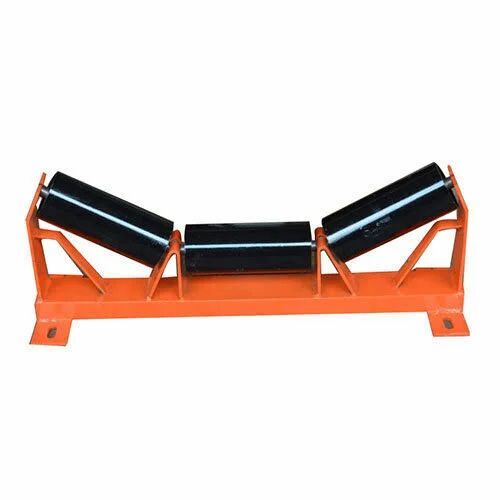
Stone Crusher Rollers are conveyor rollers used in stone crushing, quarrying, and aggregate handling systems to support and guide the conveyor belt while transporting crushed stone and bulk materials. They are designed for continuous operation under demanding conditions involving heavy loads, abrasive materials, dust, vibration, and impact. Depending on the conveyor arrangement, stone crusher systems can use carrying rollers, return rollers, impact rollers, conveyor idler sets, and conveyor brackets. Correct roller selection helps maintain belt alignment, support the conveyed load, reduce belt and bearing wear, and provide smooth material conveying.
Share Your Conveyor Roller Requirements With Us and Get the Best Price, Tailored to Your Needs. Our Team Will Respond Quickly With a Competitive Quote.
3-Roll / 2-Roll / 5-Roll
76–159 mm
400–2400 mm
04
20° / 35° / 45°
05
200–1200 mm
06
20–40 mm
07
≤0.5 mm
08
−20°C to +80°C
Choose the idler set according to conveyor capacity, belt dimensions, material characteristics and operating conditions.
Select the idler frame and roller length according to the conveyor belt width to provide stable belt support.
Consider required TPH, bulk density and belt speed to determine the roller load and suitable idler arrangement.
Choose roller diameter based on belt speed, load, roller length and required service life. Common sizes range from 76 to 159 mm.
Select 20°, 35° or 45° troughing according to the belt profile, material characteristics and required carrying capacity.
Carrying, impact and return spacing should be selected according to belt load, belt tension, material impact and conveyor design.
Verify shaft diameter, bearing size and expected radial load before finalizing the idler assembly.
For abrasive, dusty, wet or corrosive environments, select suitable tube material, seals and surface protection.
Where material falls heavily onto the belt, use an impact idler arrangement with suitable spacing and impact protection.
Enter your conveyor operating requirements to get a preliminary roller selection based on belt width, material load, conveyor speed, and roller spacing.
This calculator provides a preliminary selection for conveyor roller planning. Final roller diameter, bearing arrangement, shaft size, shell thickness, spacing, and load rating should be confirmed from the complete conveyor design and operating conditions.
Conveyor idler sets provide continuous belt support and help maintain stable conveyor operation across bulk material handling industries.
Used for transporting coal, iron ore, limestone, copper ore and other bulk minerals across mining conveyor systems.
Suitable for conveying limestone, clinker, gypsum, coal and other raw materials used in cement manufacturing.
Used in coal handling and bulk material conveyor systems within thermal power plants and fuel handling facilities.
Supports conveyor systems handling iron ore, pellets, coke, limestone, slag and other heavy industrial materials.
Used for conveying crushed stone, gravel, sand and other abrasive materials from crushing and screening operations.
Supports high-capacity conveyor systems used for loading, unloading and transferring bulk materials.
Suitable for material handling systems transporting sand, scrap, coke and other foundry materials.
Used across industrial conveyor systems for continuous movement of granular, crushed and bulk solid materials.
Used in large material handling systems for construction, tunneling, road and infrastructure projects.
Inspect the bearing and seal, remove contamination, and replace the damaged bearing or complete roller if required.
Check the bearing condition and seals. Replace worn components and ensure the correct bearing arrangement is used.
Check roller runout, shaft condition, mounting bolts, and idler alignment. Replace damaged components.
Realign the idler set perpendicular to the conveyor centerline and inspect adjacent idlers.
Check material characteristics and roller specification. Replace excessively worn rollers and review the roller diameter and spacing.
A conveyor idler set is an assembly of rollers arranged to support and guide a conveyor belt. Carrying idlers normally support the loaded belt, while return idlers support the empty belt on the return side.
Common arrangements include 2-roll, 3-roll and 5-roll idler sets. The appropriate arrangement depends on belt width, trough angle, material load and conveyor design.
Consider the belt width, conveyor capacity, bulk density, belt speed, roller diameter, trough angle, material size, idler spacing and operating environment.
Common conveyor roller diameters include 76, 89, 102, 108, 114, 127, 133 and 159 mm. The appropriate diameter depends on the belt speed, load and required service life.
Common trough angles are 20°, 35° and 45°. The selection depends on the conveyor design and the characteristics of the conveyed material.