- Global Supply | Worldwide Delivery

Complete Conveyor Idler Solutions for Reliable Bulk Material Handling
Our Conveyor Idler Sets are engineered to support the conveyor belt, maintain proper belt alignment, and provide smooth material conveying across demanding operating conditions. We supply complete solutions including Conveyor Bracket, Conveyor Roller Set, Impact Rollers, and Return Rollers, with configurations selected according to belt width, load, conveyor arrangement, material characteristics, and operating requirements.
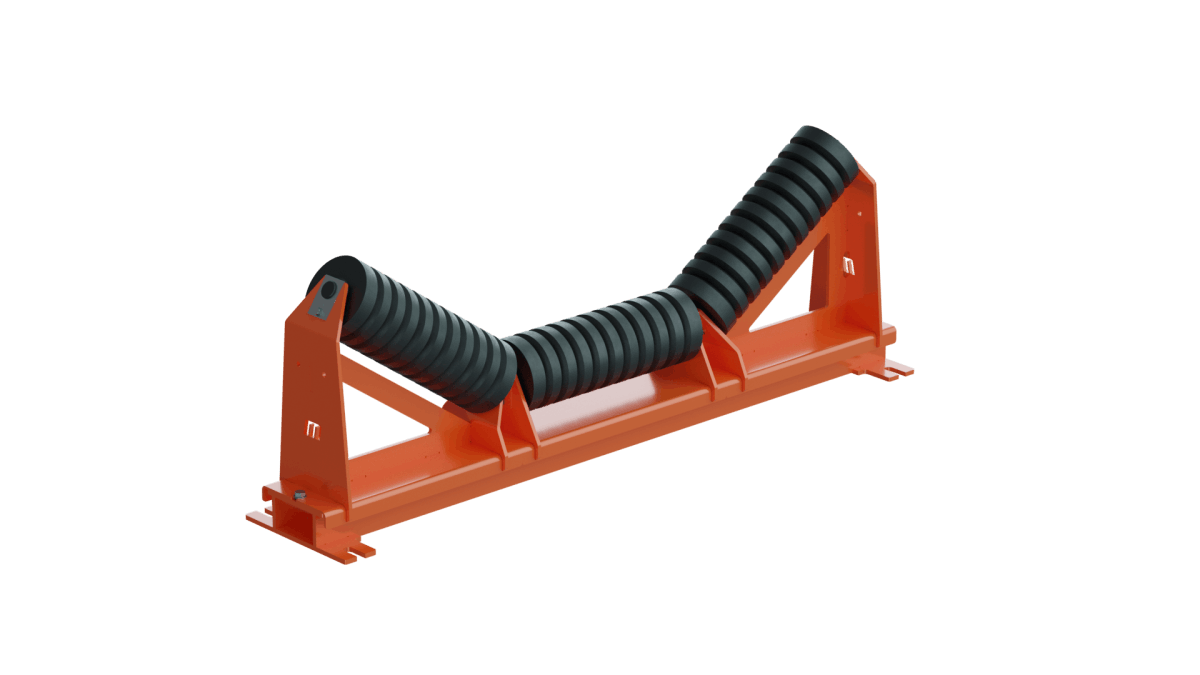
A conveyor idler set is an assembly of conveyor rollers and supporting brackets designed to support the conveyor belt as it carries bulk material. The idler arrangement helps maintain belt shape, reduce belt sag, support the conveyed load, and provide smooth movement along the conveyor system.
Depending on the conveyor position and operating conditions, an idler set can be configured as a carrying idler, return idler, or impact idler. The selection depends on factors such as belt width, material load, conveyor speed, material characteristics, loading conditions, and installation arrangement.
Share Your Conveyor Roller Requirements With Us and Get the Best Price, Tailored to Your Needs. Our Team Will Respond Quickly With a Competitive Quote.
76–159 mm
400–2400 mm
3-Roll / 2-Roll / 5-Roll
04
20° / 35° / 45°
05
200–1200 mm
06
20–40 mm
07
2.5–6 mm
08
−20°C to +80°C
Enter your conveyor operating requirements to estimate the material load per idler and identify a suitable idler arrangement.
Select the idler set according to belt width, material load, roller diameter, trough angle and conveyor operating conditions.
Select an idler set that matches the conveyor belt width and provides adequate support across the loaded belt.
Choose the roller diameter according to belt speed, material load, roller length and required load capacity.
Select the required trough angle, commonly 20°, 35° or 45°, according to the conveyor design and material profile.
Consider conveyor capacity, material bulk density, belt speed and loading conditions when selecting the idler arrangement.
Select carrying, impact and return idler spacing based on belt load, belt tension and conveyor operating conditions.
Verify shaft diameter, bearing size, sealing arrangement and expected radial load before finalizing the idler set.
Conveyor idler sets are used to support, guide and maintain the conveyor belt across a wide range of bulk material handling systems.
Used for transporting coal, iron ore, limestone, aggregates and other mined materials over long conveyor routes.
Supports conveyor belts handling limestone, clinker, crushed stone, sand and other construction materials.
Suitable for belt conveyors used in coal handling, ash handling and bulk fuel transportation systems.
Used in material handling systems transporting ore, pellets, coke, slag and other heavy materials.
Supports high-capacity conveyor systems used for loading and unloading bulk materials at ports and terminals.
Designed for conveyor systems carrying gravel, crushed rock, sand and other abrasive aggregate materials.
Inspect the bearings for contamination, seizure, or excessive wear. Replace damaged bearings and check that the roller shaft is correctly aligned.
Check bearings, seals, shaft alignment, and roller mounting. Replace worn bearings and damaged sealing components.
Inspect the roller for bending, imbalance, damaged bearings, or material buildup. Replace the defective roller and clean accumulated material.
Check for shaft misalignment, bearing damage, or deformation of the roller tube. Correct the mounting or replace the damaged component.
Check the alignment and positioning of the complete idler set. Inspect carrying and return rollers for incorrect installation or buildup.
A conveyor idler set is an assembly of rollers and supporting brackets used to support the conveyor belt and conveyed material during operation.
Depending on the configuration, an idler set can include conveyor brackets, conveyor roller sets, carrying rollers, return rollers, and impact rollers.
Carrying idlers support the loaded upper side of the conveyor belt, while return idlers support the empty belt on its return path.
Impact rollers are generally installed below conveyor loading and transfer points where falling material creates higher impact forces on the belt.
Selection should consider belt width, belt speed, material load, conveyor capacity, material characteristics, idler spacing, loading conditions, and conveyor arrangement.