- Global Supply | Worldwide Delivery

MS Conveyor Roller is a practical choice for conveyor systems handling bulk materials, packaged goods, mining products, aggregates, cement, and general industrial loads. In addition, the mild steel body provides the strength and structural support required for continuous material conveying while maintaining smooth belt movement.
The roller works as part of a complete conveyor arrangement and can be selected according to belt width, load, conveyor speed, material characteristics, and installation conditions. For applications that require different material or surface properties, HDPE Roller, SS Conveyor Roller, and Conveyor Return Roller can also be considered based on the conveyor’s operating requirements.
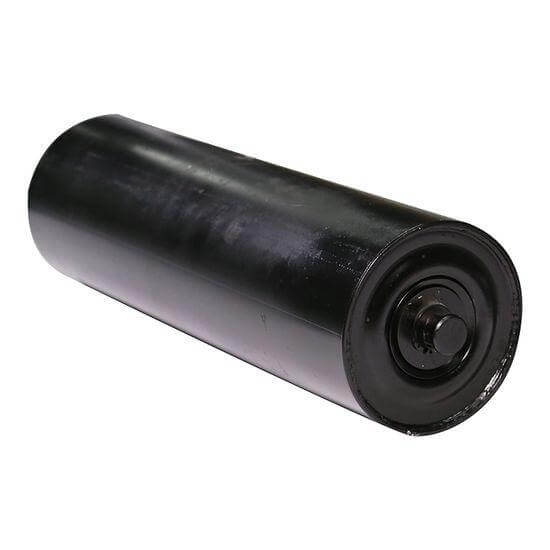
Selecting the right MS Conveyor Roller requires more than matching the roller to the belt width. Consider the conveyor load, belt speed, roller spacing, shaft, bearing arrangement and working environment to achieve reliable belt support and smooth rotation.
Start with the conveyor belt width and select a roller length that provides proper belt support without excessive overhang.
Calculate the approximate load carried by the conveyor. For heavier loads, use suitable roller capacity and spacing.
Belt speed influences roller rotation and bearing performance. Therefore, higher-speed systems require careful consideration of balance, bearings and alignment.
Choose the roller diameter according to belt width, load, speed and operating duty. As a result, the selected diameter should support smooth and stable rotation.
Roller spacing should provide adequate belt support under the expected material load. For this reason, heavy or concentrated loads may require closer spacing.
The shaft and bearing arrangement should withstand the expected radial load, starting conditions and continuous operating duty.
Consider whether the conveyor handles aggregates, stone, coal, ore, cement or other bulk materials. In particular, abrasive and large-lump materials can create higher impact and loading conditions.
Check for dust, moisture, humidity and corrosive conditions. Depending on the environment, surface protection or a corrosion-resistant roller material may be more appropriate.
Belt Width → Load → Speed → Diameter → Spacing → Shaft → Bearing → Environment
190–2400 mm
20–50 mm
Mild Steel / Carbon Steel
3–8 mm
60–159 mm
Deep Groove Ball Bearing
6204–6310 Series
Painted / Powder Coated / Galvanized
−20°C to +80°C
Up to 5 m/s*
Estimate the load carried by each conveyor roller based on your conveyor operating conditions.
This calculator provides an approximate engineering estimate. Actual roller selection should consider belt width, material characteristics, lump size, conveyor inclination, impact conditions, bearing arrangement, shaft design and operating environment.
A quick diagnostic path for common MS Conveyor Roller issues.
Check the bearings for contamination, wear, or insufficient lubrication. If damage is found, replace the bearings and ensure that the roller shaft is correctly aligned.
Inspect the bearing, shaft, and roller body for wear or misalignment. If any components are loose, tighten them and replace damaged bearings where required.
Check the roller mounting, shaft seating, and conveyor frame alignment. If the roller is not correctly positioned, adjust it so that the roller remains properly seated.
Check for excessive load, bearing condition, lubrication, and shaft alignment. If abnormal loading is present, reduce the load and replace the bearing if it is damaged.
Inspect the roller shell for excessive wear, dents, or deformation. If the working surface is damaged, replace the roller when it can no longer provide proper belt support.
Check whether the rollers are square to the conveyor frame. Also, inspect for material buildup and correct any alignment issues that affect belt tracking.
Inspect the shaft, brackets, fasteners, and mounting arrangement. Also, tighten loose connections and replace damaged mounting components.
Stop the conveyor safely and remove accumulated material. Then, check whether sealing, cleaning, or improved material handling can help prevent repeated buildup.
MS Conveyor Rollers are used in many material-handling systems where conveyor belts need consistent support during operation. Their suitability depends on belt width, material load, belt speed, roller spacing, and working conditions.
Used in conveyor systems for transporting minerals, ore, and other bulk materials. Therefore, roller selection should consider material load and impact conditions.
Used in material-handling conveyors for raw materials, aggregates, and other bulk materials throughout cement processing facilities.
Used to support conveyor belts transporting crushed stone, aggregates, and similar materials. For this reason, roller selection should consider load, lump size, and impact conditions.
Used in industrial conveying systems for moving bulk and process materials. Stable belt support is important for continuous operation.
Used in selected bulk material-handling conveyors to support the belt as materials move between different stages of the system.
Suitable for selected conveyor arrangements used to move packaged goods, materials, and unit loads within industrial handling facilities.
Used in various industrial conveyor systems where dependable belt support and continuous material movement are required.
An MS Conveyor Roller is a conveyor component made mainly from mild steel. It supports and guides the conveyor belt and the material being carried. It is commonly used in bulk material handling and industrial conveyor systems.
MS Conveyor Rollers are used in mining, cement, aggregates, stone crushing, steel, power plants, warehouses, and general material handling. The roller configuration depends on the conveyor design and operating conditions.
Selection depends on factors such as belt width, material load, belt speed, roller spacing, and roller diameter. It also depends on shaft diameter, bearing arrangement, and the operating environment. The conveyed material and impact conditions should also be considered.
The required diameter depends on belt width, belt speed, load, roller spacing, and operating duty. Larger diameters may suit higher loads or demanding conveyor conditions. However, the complete roller assembly should be evaluated instead of selecting the diameter alone.
Roller spacing determines how often the belt is supported. **Closer spacing generally provides better support** under load. Wider spacing can increase the load carried by each roller. **Therefore,** the right spacing depends on the belt and material characteristics.
Common causes include worn bearings, shaft misalignment, damaged components, contamination, or loose mounting. First, inspect the bearing and shaft assembly to identify the cause. This can help prevent further damage during operation.
Correct roller selection, proper alignment, and suitable spacing can help reduce premature wear. In addition, regular inspection and material buildup control can improve roller performance. Check the bearings and mounting components periodically.
Standard mild steel rollers may need extra surface protection in wet or corrosive conditions. Depending on the environment, suitable coatings, galvanized components, stainless steel rollers, or other corrosion-resistant options may be considered.
The main difference is the material used for construction. MS rollers are made from mild steel and are widely used in general industrial applications. In contrast, SS rollers are made from stainless steel and can be selected when greater corrosion resistance or specific hygiene requirements are needed.