- Global Supply | Worldwide Delivery

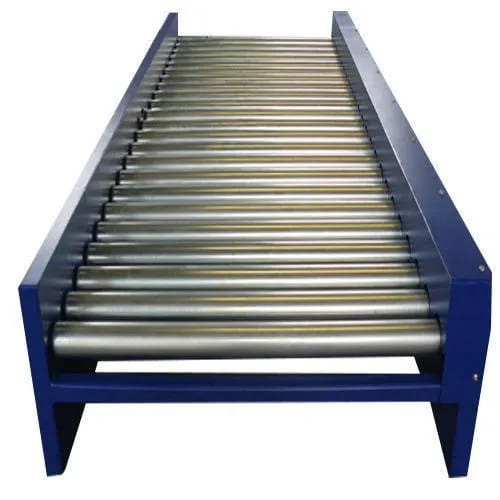
We supply Conveline Systems conveyor rollers for material handling, conveyor automation, warehousing, packaging, logistics, manufacturing, and other industrial applications. Conveline Systems offers a broad range of conveyor rollers designed for different conveying arrangements, including gravity and powered roller conveyor systems.
The available roller configurations include gravity rollers, fixed-driven rollers, grooved rollers, tapered curve rollers, accumulation rollers, 24V DC rollers, and special rollers. Roller construction and dimensions can be selected according to the conveyor layout, conveyed load, roller spacing, speed, and operating environment.
Share your required roller diameter, length, shaft arrangement, conveyor type, quantity, and application details with us. We can check the suitable Conveline Systems conveyor roller configuration and provide quotation details.
Share Your Conveyor Roller Requirements With Us and Get the Best Price, Tailored to Your Needs. Our Team Will Respond Quickly With a Competitive Quote.
Carrying rollers are used to support and carry the loaded conveyor belt along the conveying path. They are commonly used in bulk material-handling and belt conveyor systems and can be selected according to belt width, load capacity, roller diameter and operating conditions.
Conveyor bracket sets are used to mount and support conveyor rollers within the conveyor frame. They provide the required roller positioning and structural support for carrying and return roller arrangements.
Stainless steel (SS) conveyor rollers are suitable for applications requiring corrosion resistance and easy cleaning. They are commonly used in food processing, pharmaceutical, packaging and other environments where hygienic or moisture-resistant conveyor components are required.
HDPE rollers are manufactured using high-density polyethylene and are used where lightweight, corrosion-resistant and low-maintenance roller solutions are required. They can be applied in material-handling and conveyor systems where conventional steel rollers may not be suitable.
Mild steel (MS) conveyor rollers are designed for general-purpose material handling and conveyor applications. They provide a robust and economical roller solution and can be selected according to conveyor dimensions, load requirements and operating conditions.
*Published values apply to specified Conveline roller configurations. Exact specifications vary by roller series and application.
Selecting a conveyor roller requires matching the roller configuration to the conveyor design and operating conditions.
Determine the weight and type of material being conveyed. Heavier loads generally require a suitable roller diameter, shaft arrangement, bearing configuration and roller spacing.
Roller diameter affects load handling, rotation and conveyor performance. Conveline’s published gravity roller range includes diameters from 25 mm to 89 mm depending on the series.
The roller length should match the conveyor frame width and the required product support area. The usable roller width should provide stable support for the conveyed product.
Shaft diameter and end configuration should be selected according to the conveyor frame, loading conditions and mounting arrangement. Conveline publishes different shaft sizes across its roller series.
Bearing configuration affects roller rotation, operating smoothness and suitability for the intended load and environment.
Roller pitch should be selected according to the dimensions and bottom surface of the conveyed product so that the load remains adequately supported.
Powered roller systems require the roller and drive configuration to match the required conveying speed. For example, Conveline publishes a Poly Vee powered roller configuration suitable for speeds up to 120 m/min.
Consider temperature, moisture, dust, chemicals, hygiene requirements and other environmental conditions before selecting tube material, bearing housing and roller construction.
Conveline Systems conveyor rollers are used in a range of material-handling and industrial conveying applications, including:
Check the bearing condition, shaft alignment, mounting arrangement and possible material contamination around the roller ends.
Unusual noise can be associated with bearing wear, incorrect installation, contamination or damage to rotating components. Inspect the roller and bearing assembly before continued operation.
Check shaft alignment, roller concentricity, mounting condition and conveyor frame alignment when abnormal vibration occurs.
Inspect roller spacing, roller rotation, conveyor inclination and the condition of the product-contacting surfaces.
For powered and accumulation rollers, inspect sprocket alignment, drive elements, chain or belt engagement and the condition of the roller assembly.
Share Your Conveyor Roller Requirements With Us and Get the Best Price, Tailored to Your Needs. Our Team Will Respond Quickly With a Competitive Quote.
The published range includes gravity rollers, fixed-driven rollers, grooved rollers, tapered curve rollers, accumulation rollers, 24V DC rollers and special rollers.
Published gravity roller series include diameters from 25 mm to 89 mm, depending on the roller series.
Yes. Published specifications include stainless-steel SS304 configurations for several roller types.
Gravity rollers move products using gravity or manual force, while powered rollers are integrated with a drive system to provide controlled product movement.
Yes. Conveline’s range includes tapered curve rollers designed for curved conveyor arrangements.
Share the required roller diameter, roller length, shaft diameter and end arrangement, tube material, quantity, conveyor type, load, speed and application conditions.