- Global Supply | Worldwide Delivery

Mining Heavy Duty Rollers are engineered for demanding conveyor applications where high loads, abrasive materials, impact, and continuous operation require reliable roller performance. Our range includes Stone Crusher Rollers, Conveyor Idler Sets, SS Conveyor Rollers, and MS Conveyor Rollers, designed for stable belt support, smooth rotation, reduced belt wear, and dependable service in mining and heavy-duty material handling systems.
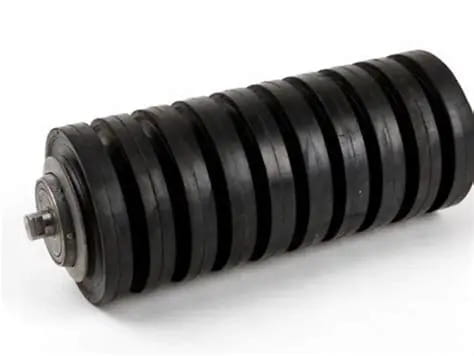
A Mining Heavy Duty Roller is a robust conveyor component designed to support conveyor belts carrying heavy, abrasive and high-volume materials in demanding mining and bulk-material handling applications. These rollers are engineered to withstand high loads, continuous operation, impact forces, dust, vibration and harsh working conditions. They typically use a heavy-wall steel tube, accurately machined shaft, sealed bearings and suitable sealing arrangements to provide smooth belt movement and long service life. Mining heavy duty rollers are commonly used in conveyors transporting coal, iron ore, limestone, stone, aggregates and other bulk materials. Roller diameter, tube thickness, shaft size, bearing arrangement and spacing should be selected according to belt width, material load, belt speed, impact conditions and conveyor configuration.
Share Your Conveyor Roller Requirements With Us and Get the Best Price, Tailored to Your Needs. Our Team Will Respond Quickly With a Competitive Quote.
89–159 mm
4–12 mm
20–50 mm
04
250–1800 mm
05
Deep Groove Ball Bearing
06
6204–6310 Series, depending on load
07
Carbon Steel / MS
08
Approximately −20°C to +80°C
Selecting the correct roller requires more than choosing a roller diameter. Conveyor capacity, belt width, material characteristics, belt speed, roller spacing, impact conditions, environment, and mounting arrangement should all be considered before specifying the roller.
Start with the conveyor capacity in TPH and the expected material load. Higher material loads require suitable roller diameter, tube construction, shaft strength, bearing capacity, and roller spacing to safely support the belt and conveyed material.
Select the roller length according to the conveyor belt width and existing frame arrangement. The roller should provide proper belt support without interfering with the conveyor structure or adjacent components.
Roller diameter should be selected according to belt speed, load, belt construction, bearing arrangement, and required operating life. Larger diameters can be suitable for demanding applications where higher load and rotational requirements are present.
Consider the material being conveyed. Stone, crushed rock, ore, aggregates, and other abrasive materials can require robust roller construction and suitable surface protection for reliable service.
Areas where large or heavy material falls onto the belt require special consideration. Impact zones may require impact rollers with appropriate rubber ring construction, spacing, and load capacity.
Bearing selection should match the expected radial load, speed, operating temperature, and service conditions. Effective sealing is particularly important where dust, water, mud, or abrasive particles may enter the roller assembly.
Check whether the conveyor operates in dusty, wet, corrosive, high-temperature, or outdoor conditions. Stainless steel rollers may be suitable where corrosion resistance is important, while properly protected MS rollers can be used for many heavy-duty mining applications.
Choose the roller according to its conveyor position and function. Carrying arrangements, return arrangements, idler sets, crusher conveyors, and special-duty applications may require different roller configurations.
For accurate roller selection, provide the belt width, conveyor capacity, belt speed, roller diameter, roller spacing, material characteristics, conveyor inclination, operating environment, and existing mounting dimensions. These details help determine the appropriate roller construction and configuration for the application.
Estimate the material load carried by each roller based on conveyor capacity, belt speed, and roller spacing.
Mining Heavy Duty Rollers are used in conveyor systems that transport heavy, abrasive, and bulk materials. Their construction and configuration can be selected according to the conveyor duty, material characteristics, loading conditions, and operating environment.
Used in mining conveyor systems for continuous transportation of ore, coal, minerals, and other bulk materials over long distances.
Suitable for conveyors handling crushed stone, rock, aggregates, and other abrasive materials produced during crushing operations.
Used for conveying sand, gravel, crushed aggregate, and construction materials between crushing, screening, and stockpiling equipment.
Applied in material handling conveyors transporting iron ore, mineral ore, and other heavy bulk materials in processing facilities.
Used in conveyor systems for transferring coal between receiving, processing, storage, and loading areas.
Suitable for conveying limestone, clinker, gypsum, minerals, and other bulk materials used in cement and mineral processing.
Used where continuous belt conveyors are required to move heavy bulk materials efficiently between different process stages.
Installed on conveyors connecting crushers, screens, feeders, and stockpiles in demanding aggregate and mineral processing systems.
Used in exposed conveyor installations where rollers must operate reliably under dust, moisture, temperature changes, and continuous material handling conditions.
Inspect the bearing and shaft alignment. Replace damaged bearings and verify that the roller is correctly mounted.
Check the bearing and sealing arrangement. Replace damaged components and keep contaminants away from the bearing area.
Check roller runout, shaft straightness, and mounting alignment. Replace the roller if excessive deformation is found.
Check operating load and bearing condition. Replace the bearing if damaged and use the specified lubrication.
Inspect seals and mounting conditions. Improve protection against contamination and select bearings according to the actual conveyor load.
Mining heavy duty rollers are used to support conveyor belts carrying heavy and abrasive bulk materials such as coal, ore, limestone, stone, aggregates, and other mined materials.
Selection should consider belt width, material load, belt speed, bulk density, impact conditions, roller diameter, roller spacing, conveyor inclination, and operating environment.
Common sizes range from approximately 89 mm to 159 mm, although the required diameter depends on belt width, load, speed, and conveyor design.
The roller shell is commonly manufactured from carbon steel or MS, while shafts are typically made from C45 or EN8 steel. Other materials and protective finishes can be selected for specific operating environments.
Yes. They can be designed for abrasive bulk materials by using suitable tube thickness, bearings, seals, shaft dimensions, and surface protection.