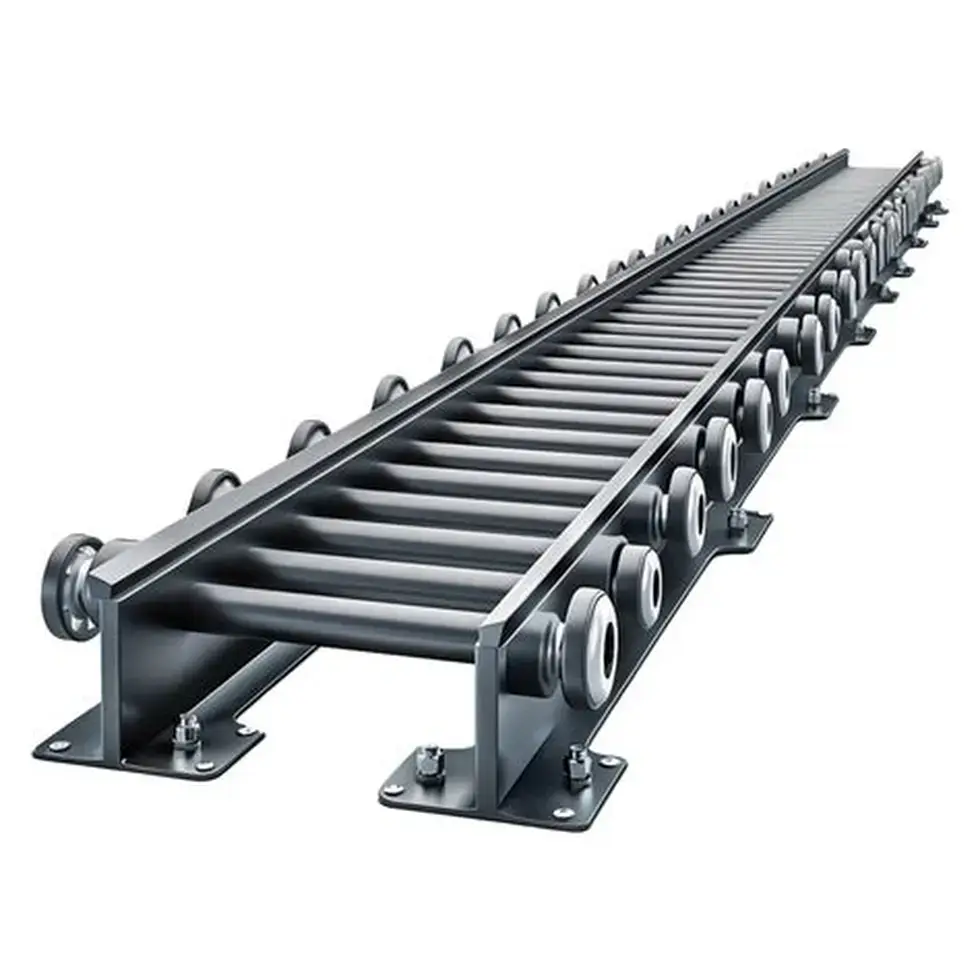
We supply Perfect Engineering Components conveyor rollers and idlers for industrial conveyor and bulk material handling applications. The available range includes conveyor roller idlers, guide rollers, impact idlers, garland carrying idlers, bracket roller idlers and other conveyor components.
Roller selection depends on the conveyor load, belt width, roller diameter, shaft arrangement, roller length, speed, spacing and operating environment. Perfect Engineering Components’ published product information includes customized roller sizes and applications across mining, cement, power plants and material handling.
Share the required roller dimensions, conveyor details and quantity with us to check the suitable product specification and request a quotation.
ENGINEERED FOR PERFORMANCE
Request For Quote
NEED A CUSTOM QUOTE?
Get the Right Price for Your
Conveyor Roller
Share Your Conveyor Roller Requirements With Us and Get the Best Price, Tailored to Your Needs. Our Team Will Respond Quickly With a Competitive Quote.
Technical Specifications of Perfect Engineering Components Conveyor Rollers
Roller Diameter60–219 mm
Roller Length150–1200 mm
Published Width Range600–3000 mm
Shell Thickness3.5–4.5 mm
Load Capacity1250–1550 kg
Published Speed1.1–5.5 m/s
Surface Hardness55–70 Shore A
MaterialMild Steel / Stainless Steel
Working Temperature0–100 °C
Bearing ArrangementSealed / Lubricated for Life
How to Choose the Right Perfect Engineering Components Conveyor Roller
Start with the material load and belt width because these determine how much support the roller arrangement must provide. Roller diameter should then be selected according to the conveyor load, belt speed and required carrying capacity.
The roller length should match the conveyor structure and belt width while allowing the belt to remain properly supported. Shaft diameter and bearing arrangement also need to be checked against the operating load and expected service conditions.
For impact zones, an impact roller arrangement is more appropriate than a standard carrying roller because the loading conditions are different. Guide rollers are used where belt alignment and tracking require additional control. Perfect Engineering Components lists separate guide, impact, garland and idler roller configurations rather than treating every roller as the same product.
Perfect Engineering Components rollers and idlers are listed for applications such as:
Mining
Cement plants
Power plants
Coal handling
Bulk material handling
Aggregate handling
Industrial conveyor systems
Manufacturing applications
Troubleshooting
A quick diagnostic path for common conveyor roller issues.
1
Roller stops rotating
Check bearing condition, shaft alignment and material buildup around the roller ends.
2
Bearing noise during operation
Inspect lubrication, sealing and bearing condition. Continuous noise can indicate bearing wear or contamination.
3
Roller vibration
Check roller balance, shaft alignment, mounting condition and excessive material buildup.
4
Shell surface wear
Inspect the roller surface for abrasive material contact, impact loading and operating conditions.
5
Belt tracking problems
Check the alignment and position of carrying, return and guide rollers before changing the roller arrangement.
Request For Quote
NEED A CUSTOM QUOTE?
Get the Right Price for Your
Conveyor Roller
Share Your Conveyor Roller Requirements With Us and Get the Best Price, Tailored to Your Needs. Our Team Will Respond Quickly With a Competitive Quote.
The published range includes conveyor roller idlers, guide rollers, impact idlers, garland carrying idlers, bracket roller idlers and heavy-duty idler rollers.
Published examples list 1250 kg for guide/garland roller products and 1550 kg for the conveyor idler listing. The applicable capacity depends on the specific roller design.