- Global Supply | Worldwide Delivery

Global Conveyor Systems Pvt. Ltd. focuses on conveyor equipment and bulk material handling solutions. Its official information describes capabilities covering the design, manufacture, installation and commissioning of conveyor systems and accessories.
The company’s product range includes conveyor rollers and other components used to support, guide and transport conveyor belts. Its solutions are also associated with applications involving materials such as salt, sulphur, urea and phosphate.
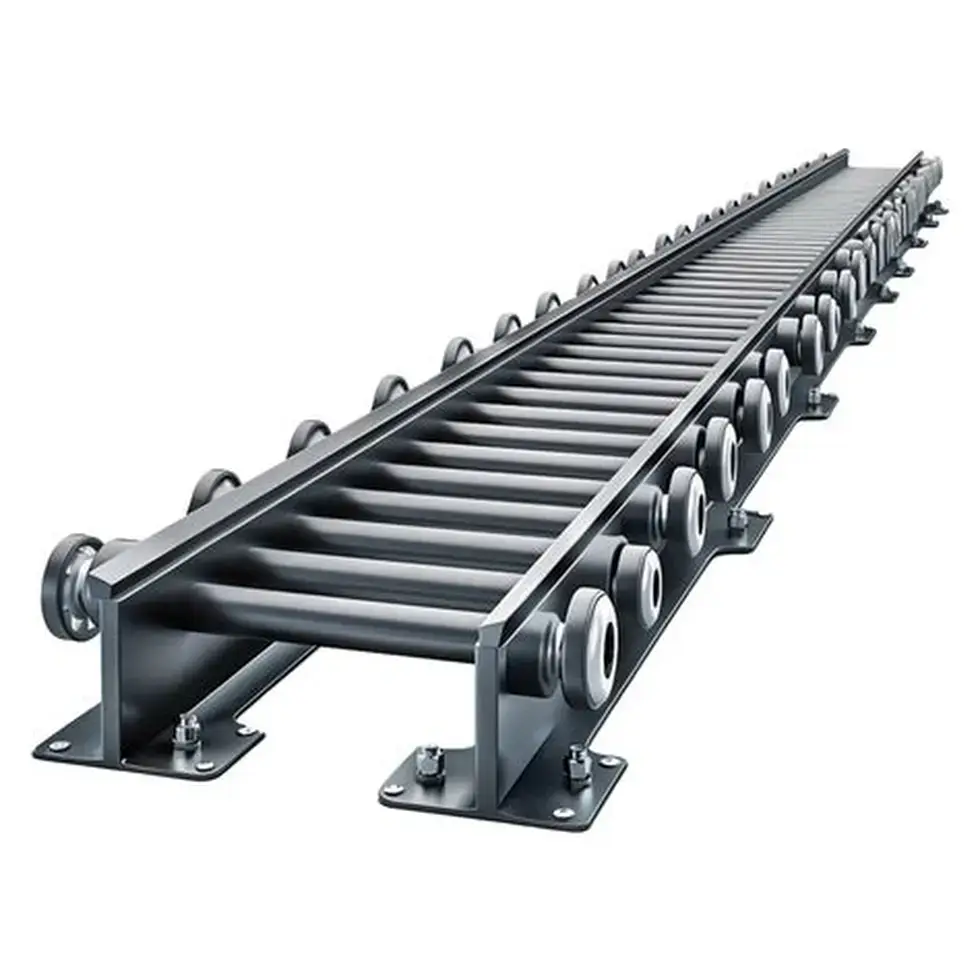
Share Your Conveyor Roller Requirements With Us and Get the Best Price, Tailored to Your Needs. Our Team Will Respond Quickly With a Competitive Quote.
The product range associated with Global Conveyor Systems Pvt. Ltd. includes several conveyor components and material handling solutions.
The required product depends on the conveyor design, material being handled and operating conditions.
Conveyor rollers support the conveyor belt and the material carried on it. They rotate as the belt moves across the conveyor structure.
Roller selection depends on several factors. These include belt width, load, belt speed, roller spacing and operating environment.
Different conveyor sections can also require different roller arrangements. Carrying areas, return areas and loading zones may have different operating loads.
HDPE polymer rollers are designed for applications where corrosion resistance and lower roller weight are important.
These rollers can be useful in environments where conventional metal components may face corrosion or material buildup. The application should be reviewed before selecting the roller material.
The required roller dimensions should also match the conveyor structure. Important details include roller diameter, roller length and shaft arrangement.
Conveyor pulleys help drive, support and redirect the conveyor belt. The pulley arrangement depends on the conveyor layout.
Common pulley positions include the head, tail and take-up sections. Each position can have different operating requirements.
Pulley selection should consider belt tension, shaft dimensions, bearing arrangement and conveyor speed.
Belt tracking equipment helps maintain the correct position of the conveyor belt.
A belt that moves away from its intended path can create several problems. It may cause belt edge damage, material spillage and uneven component wear.
Therefore, tracking equipment should match the conveyor design and belt characteristics.
Material can remain on the belt after the main discharge point. This material is known as carryback.
Belt cleaning equipment helps remove carryback from the belt surface. It can also help reduce material accumulation around conveyor components.
The correct cleaner depends on the material, belt speed, belt construction and operating conditions.
HPPE Polymer Roller
High Performance Polyethylene (HPPE)
More than 3.5 million g/mol
Composite non-metal shaft
Fiberglass and epoxy resin composite
CEMA C and D equivalent
0.00022
Approximately 70% lighter than conventional metal rollers
Approximately 14 lb
Double labyrinth seal
Nylon 6
Designed for highly corrosive environments
Low-surface-roughness HPPE surface helps resist material buildup
Rounded edge behaviour in seizure conditions
Designed for lower-noise conveyor applications
Fertilizer, salt, sugar, pulp and paper, coal mining, cement, concrete, limestone and quarry applications
Choosing a conveyor component starts with understanding the application.
First, identify the material being conveyed. Then, check the conveyor dimensions and operating conditions.
The following factors should be reviewed before selecting a product.
Check the characteristics of the conveyed material.
Consider:
These properties can affect the required conveyor component.
Belt width affects roller length and conveyor structure.
A wider belt may require a longer roller and a suitable shaft arrangement. Therefore, the belt width should be provided when requesting a roller or conveyor component.
Belt speed affects roller rotation and component operating conditions.
Higher belt speeds can increase bearing and sealing requirements. The roller should therefore be suitable for the required operating speed.
You can use our Belt Speed Calculator to calculate conveyor belt speed from the available conveyor parameters.
The conveyor load affects the required roller and component capacity.
Loading zones can experience higher forces than other conveyor sections. Therefore, the same roller specification may not be suitable for every position.
The environment also affects product selection.
Check whether the conveyor operates in:
The component material and construction should match these conditions.
Global Conveyor Systems products and conveyor solutions can be used in several bulk material handling industries.
Mining conveyors transport materials such as coal, ore and minerals. These materials can create high loads and abrasive operating conditions.
Therefore, conveyor rollers and pulleys should be selected according to the conveyor capacity and material characteristics.
Impact zones can require additional consideration because falling material can create high impact forces.
Cement plants use conveyors to transport materials such as limestone, clinker and gypsum.
Dust and abrasion can affect conveyor components in these environments. Regular inspection can help identify roller, pulley and belt problems at an early stage.
Steel plants use conveyor systems for moving raw materials and processed materials.
These systems can operate under high loads and demanding conditions. Temperature, material weight and conveyor layout should be considered when selecting components.
Fertilizer handling can involve materials that create challenging operating conditions.
Corrosion resistance can become an important consideration in these applications. The conveyor component should therefore be selected according to the material and environment.
Ports use conveyor systems for continuous movement of bulk materials.
Conveyor components in port applications can face dust, moisture and long operating hours. Proper roller, pulley and belt-support selection can help maintain reliable conveyor operation.
Check for bearing damage, contamination, material buildup or shaft misalignment. A seized roller can increase belt resistance and cause additional wear.
Inspect the bearing, seal and shaft area. Continuous noise can indicate bearing wear or contamination.
Check roller alignment and mounting. Also inspect the shaft and bearing condition for damage or looseness.
Check the conveyed material and roller surface. Sticky or wet materials can increase buildup. Cleaning and suitable roller selection may help.
Check roller alignment, conveyor structure and belt tracking. Misaligned components can contribute to belt mistracking.
Share Your Conveyor Roller Requirements With Us and Get the Best Price, Tailored to Your Needs. Our Team Will Respond Quickly With a Competitive Quote.
Global Conveyor Systems Pvt. Ltd. is an Indian company associated with conveyor systems and bulk material handling equipment.
The company’s product range includes conveyor systems, rollers, pulleys and other conveyor accessories. Specialized solutions are also available for selected industrial applications.
No. We supply Global Conveyor Systems Pvt. Ltd. products. We do not claim to be the original manufacturer.
Conveyor systems and components are used in industries such as mining, cement, steel, power, fertilizer and port operations.
Provide the product name, conveyor belt width, component dimensions, shaft size, belt speed, material being conveyed and operating conditions where available.
Product suitability depends on the application and technical specification. Load, belt speed, material characteristics and operating environment should be checked before selecting a component.