- Global Supply | Worldwide Delivery

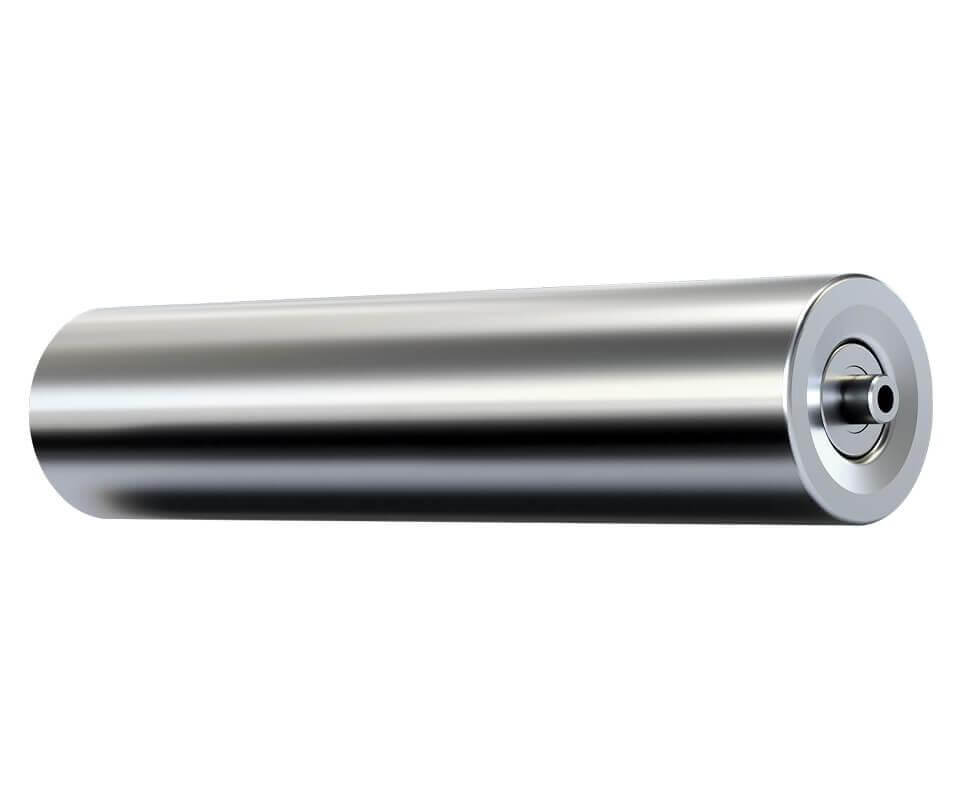
SS Conveyor Rollers are stainless steel conveyor rollers designed for material handling systems where corrosion resistance, cleanability, and reliable material movement are important. They are commonly used in food processing, pharmaceutical, chemical, packaging, and other environments where standard carbon-steel rollers may require additional protection. SS Conveyor Rollers can be selected according to conveyor width, roller diameter, shaft arrangement, load conditions, and operating environment. For complete conveyor support, related components such as Conveyor Bracket Set and Impact Roller can be used with the roller system based on the conveyor layout and material-handling requirements.
50–159 mm
300–2400 mm
20–40 mm
Stainless Steel
Stainless Steel / Carbon Steel
Sealed Deep-Groove Ball Bearing
Press-Fit / Welded / Machined, as required
Smooth / Polished Stainless Steel
Selecting a stainless steel conveyor roller requires more than choosing a roller diameter. Consider the conveyor load, belt dimensions, operating environment, shaft, bearing, surface finish and mounting arrangement to achieve reliable roller performance.
Start with the belt width and available conveyor frame space. The roller overall length should match the conveyor arrangement while maintaining suitable clearance from the frame.
Consider the material load, belt weight and load distribution supported by each roller. Higher loads may require a larger roller diameter, stronger shaft and higher-capacity bearings.
Choose the roller diameter according to load, belt speed, roller spacing and conveyor operating conditions. Larger diameters are commonly used where higher load capacity and durability are required.
Select the stainless steel grade according to the operating environment and corrosion requirements.
The shaft should be selected according to the roller load, shaft length, mounting arrangement and expected deflection. Confirm whether a fixed, spring-loaded, threaded or other shaft arrangement is required.
Bearing selection should consider load, rotational speed, moisture, contamination and operating temperature. For washdown or wet areas, suitable sealing and corrosion-resistant components are important.
For hygienic and washdown applications, specify an appropriate stainless steel surface finish. A smooth surface can help simplify cleaning and reduce material accumulation on the roller.
Check whether the roller will operate in wet, humid, corrosive, dusty, chemical or food-processing environments. Environmental conditions influence the required material, sealing and bearing configuration.
Roller spacing should support the belt without excessive sag between rollers. Heavier loads generally require closer roller spacing to maintain proper belt support.
Before ordering, verify the overall roller length, shaft dimensions, bearing arrangement, bracket dimensions and mounting method with the conveyor frame.
Enter your conveyor requirements to get a preliminary roller recommendation.
Tell us what the roller will be used for.
Enter the basic dimensions of your conveyor and product.
Choose the roller configuration you require.
Select your preferred grade or let the calculator suggest one.
—
Based on your selected requirement.
Compared with conveyor width.
Based on product length.
Preliminary distributed load.
Estimated roller RPM.
Share Your Conveyor Roller Requirements With Us and Get the Best Price, Tailored to Your Needs. Our Team Will Respond Quickly With a Competitive Quote.
Bearing damage, contamination, or shaft misalignment
Worn bearing, damaged seal, or loose mounting
Bent shaft, uneven roller surface, or misalignment
Unsuitable stainless-steel grade or corrosive operating conditions
Bearing wear or incorrect shaft seating
Excessive bearing friction, overload, or misalignment
Improper shaft locking or mounting
Misaligned rollers or conveyor frame
Excessive impact, abrasion, or unsuitable roller design
Excessive load, contamination, poor alignment, or incorrect bearing selection
An SS Conveyor Roller is a conveyor roller manufactured with stainless-steel components for material handling systems where corrosion resistance, durability, cleanability, or moisture resistance is important.
SS Conveyor Rollers are commonly used in food processing, pharmaceutical, chemical, packaging, warehousing, and other material handling applications where the operating environment requires stainless-steel construction.
Stainless steel provides better resistance to corrosion and moisture than conventional carbon-steel roller construction. It is also easier to clean, making it suitable for applications where hygiene and surface cleanliness are important.
Selection depends on conveyor width, roller diameter, roller length, load per roller, belt or material speed, roller spacing, shaft arrangement, operating environment, and the required stainless-steel grade.
The required diameter depends on the conveyed load, roller length, roller spacing, belt speed, and conveyor design. Larger diameters may be selected when higher load capacity or reduced shaft deflection is required.
Yes. Stainless-steel rollers can be suitable for wet or moisture-prone environments, provided the stainless-steel grade, bearings, seals, and other components are selected for the specific operating conditions.
SS Conveyor Rollers can use sealed ball bearings or other bearing arrangements selected according to load, speed, contamination level, and operating environment.
Yes. Roller diameter, face length, shaft diameter, shaft-end configuration, bearing arrangement, material grade, and surface finish can be specified according to the conveyor design and application requirements.