- Global Supply | Worldwide Delivery

Conveyor Bracket Set are structural components used to support and position conveyor rollers in a conveyor system. They help keep the rollers aligned, support the belt, and ensure smooth material movement along the conveyor frame.
For example, conveyor brackets can be used with Carrying Rollers and Return Rollers. The right bracket is selected based on the roller arrangement, conveyor frame design, belt width, load conditions, and installation requirements.
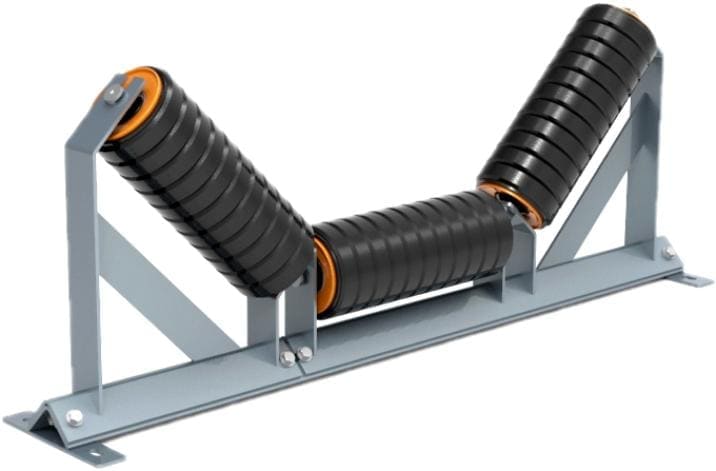
A practical technical guide to selecting the correct conveyor roller arrangement, dimensions and construction for reliable conveyor operation.
First, determine the actual belt width before selecting the roller arrangement. Roller length, bracket dimensions, and frame spacing should match the conveyor belt and supporting structure.
Next, choose the roller arrangement based on the conveyor layout. Carrying rollers support the loaded belt on the conveying side, while return rollers support the empty belt on the return side.
Then, select the roller diameter according to belt speed, belt width, load, roller spacing, and operating conditions. Larger diameters can reduce rotational speed and may suit demanding conveyor applications.
After that, verify the shaft diameter and shaft length against the expected roller load, bearing arrangement, and mounting configuration. The shaft dimensions should provide adequate support without interfering with the conveyor frame.
In addition, confirm the bracket mounting width, slot arrangement, shaft seating, and frame connection dimensions before ordering the roller assembly. This helps ensure proper installation.
For troughed conveyors, verify the required troughing angle and make sure the carrying roller arrangement matches the existing conveyor geometry and belt profile.
Also, consider the material load, belt speed, impact conditions, conveyor length, operating temperature, moisture, dust, and other environmental factors. These conditions can affect the required roller construction.
Next, select the tube and shaft material according to the load, corrosion exposure, wear conditions, and required service life. The surface finish should also suit the operating environment.
Finally, compare the roller shaft, bracket, mounting dimensions, and overall assembly with the existing conveyor frame. This final check can help prevent installation problems.
Share Your Conveyor Roller Requirements With Us and Get the Best Price, Tailored to Your Needs. Our Team Will Respond Quickly With a Competitive Quote.
01
Carrying / Return
02
63.5–159 mm
03
400–2400 mm
04
6–12 mm
05
100–300 mm
06
12–20 mm
07
20–40 mm
08
−20 to +80°C
Estimate the number of bracket sets required for carrying and return roller arrangements based on conveyor length and roller spacing.
Share your conveyor dimensions and roller requirements for technical assistance and quotation.
A quick diagnostic guide for common conveyor bracket and roller support issues.
First, check the mounting bolts, fasteners, frame connections, and bracket seating. Then, retighten loose fasteners or replace damaged components as required.
Next, inspect the bracket position, roller shaft seating, and conveyor frame alignment. Then, adjust the bracket position to maintain proper roller alignment.
Also, check for loose brackets, uneven mounting, roller imbalance, or frame misalignment. Then, inspect the complete roller support assembly to identify and correct any alignment issues.
Finally, check for excessive loading, impact, or incorrect bracket selection. Then, verify the bracket dimensions and operating load against the conveyor design.
In addition, inspect the bracket surface and operating environment for moisture, chemicals, or corrosive exposure. Then, select a suitable surface finish for the application.
Common technical questions about Conveyor Bracket Sets, Carrying Rollers, Return Rollers, installation and maintenance.
A Conveyor Bracket Set is a support assembly used to mount and position conveyor rollers on the conveyor frame. As a result, it helps maintain proper roller alignment and belt support during operation.
Its main function is to securely support Carrying Rollers or Return Rollers, maintain the required roller position, and provide a stable connection between the roller assembly and conveyor structure.
Yes. Carrying Roller Bracket Sets support rollers on the carrying side of a conveyor. Therefore, the bracket arrangement should match the required belt width, roller diameter, and troughing configuration.
Yes. Return Roller Bracket Sets support the return rollers that carry the empty conveyor belt back toward the tail or loading end of the conveyor.
A Carrying Roller Bracket supports the loaded belt side and may be designed for a troughing arrangement. In contrast, a Return Roller Bracket supports the empty return belt and generally uses a simpler roller support arrangement.
Selection depends on conveyor belt width, roller diameter, roller type, mounting arrangement, loading conditions, and the required carrying or return roller configuration. In addition, the bracket should match the existing conveyor frame.
Important information includes belt width, roller diameter, roller shaft diameter, carrying or return arrangement, bracket dimensions, mounting hole pattern, and conveyor operating conditions.
Bracket loosening can result from vibration, inadequate fastening, incorrect mounting, or repeated operating loads. Therefore, check mounting bolts, fasteners, frame connections, and bracket seating during inspection.
Misalignment can occur because of incorrect bracket positioning, uneven conveyor framing, improper roller shaft seating, or inaccurate installation. For this reason, check the roller and bracket position together.
Look for cracks, bending, excessive wear, corrosion, loose mounting points, or visible deformation. Also, abnormal roller movement and persistent vibration can indicate a bracket or mounting problem.
Inspection frequency should follow the conveyor maintenance schedule and operating conditions. In addition, brackets should be checked whenever unusual vibration, roller movement, belt tracking, or fastening issues are observed.
Yes, they can be specified for heavy-duty conveyor applications when the bracket dimensions, material, mounting arrangement, and roller support capacity are suitable for the actual conveyor loading conditions.
First, check the bracket orientation, mounting hole alignment, and fastener tightness. Then, verify roller shaft seating, roller alignment, and clearance from the conveyor belt and surrounding structure.
Replacement should be considered when the bracket is cracked, permanently deformed, excessively corroded, severely worn, or no longer maintains the required roller position and stability.
Yes. Conveyor Bracket Sets can be specified based on important conveyor dimensions such as belt width, roller diameter, shaft dimensions, mounting arrangement, and the required roller configuration. This helps ensure that the bracket matches the conveyor system.