- Global Supply | Worldwide Delivery

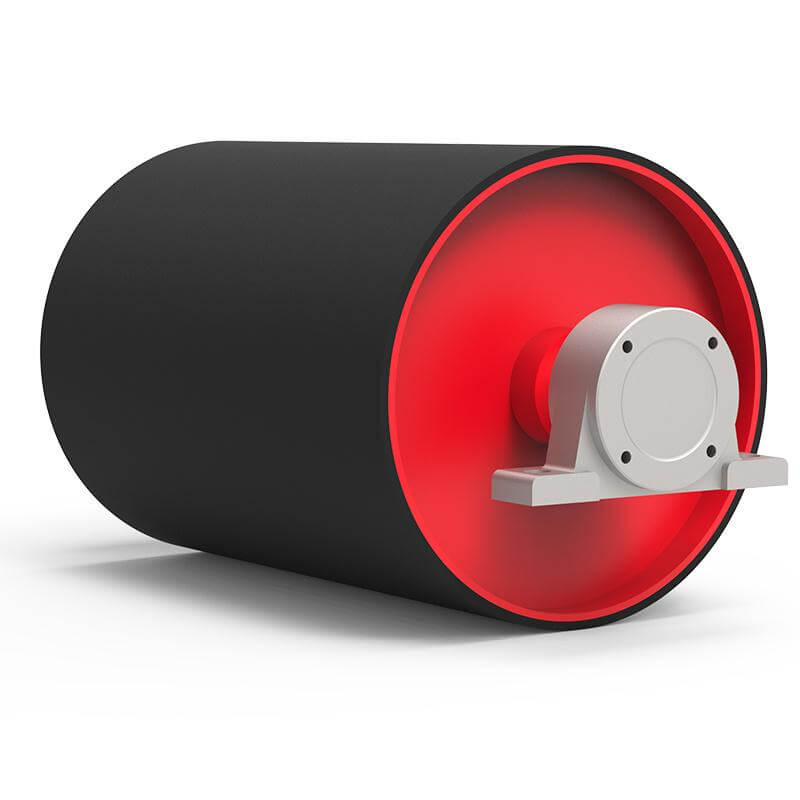
A Conveyor Drum Pulley is a rotating cylindrical component used in belt conveyor systems to drive, tension, redirect, or support the conveyor belt. It works with other conveyor components, including Carrying Rollers, Return Rollers, Idler Rollers, Conveyor Frames, Bearings, and Belt Scrapers to support smooth and reliable material conveying.
The Drive Drum Pulley transfers power from the conveyor drive system to the belt. Meanwhile, other pulley arrangements guide the belt, maintain proper belt tension, or change its direction. Conveyor Drum Pulleys are commonly used in Mining, Cement, Steel, Power Plants, Aggregates, Ports, Material Handling, and Bulk Material Conveying applications.
The pulley design depends on belt width, belt tension, conveyor capacity, belt speed, drive power, pulley diameter, shaft size, and operating conditions. Therefore, proper pulley selection can help improve belt tracking, reduce belt stress, and support reliable conveyor operation.
Belt Width: The belt width determines the required pulley face width. Therefore, the pulley should provide enough face width for the selected belt.
Belt Tension: Belt tension helps determine the required shell and shaft strength. For higher tension, stronger pulley construction may be needed.
Belt Speed: Belt speed affects pulley diameter and rotational speed. As a result, both values should be considered during pulley selection.
Drive Power: Drive power is important when selecting the Drive Pulley and lagging arrangement. In addition, higher drive power may require suitable pulley construction.
Material Load: Conveyor capacity and material characteristics affect pulley design. For this reason, the expected material load should be considered during selection.
Belt Type: EP, NN, and Steel Cord Belts may require different pulley designs. In particular, belt construction and tension rating can affect the suitable pulley diameter.
Conveyor Drum Pulley
Calculate pulley circumference and belt speed using the entered pulley diameter and rotational speed. The calculator also shows the pulley surface speed.
Check the pulley lagging, belt tension, drive alignment, and contact between the belt and pulley. In addition, inspect for moisture, material build-up, or worn lagging that may reduce traction.
Check pulley alignment, shaft position, belt tracking, conveyor frame alignment, and material loading. In addition, inspect the pulley face and adjacent Carrying Rollers and Return Rollers for alignment problems.
Inspect the lagging for excessive wear, cracks, peeling, cuts, or separation from the pulley shell. In addition, replace damaged lagging and check for belt slippage or material build-up that may accelerate wear.
Check bearing lubrication, bearing alignment, shaft condition, bearing housing, and operating load. In addition, excessive heat or noise may indicate lubrication problems, misalignment, contamination, or bearing damage.
Inspect the pulley shell, shaft, bearings, coupling, lagging, and drive alignment. In addition, check for uneven lagging, material build-up, shaft deflection, loose components, or pulley imbalance.
Share Your Conveyor Roller Requirements With Us and Get the Best Price, Tailored to Your Needs. Our Team Will Respond Quickly With a Competitive Quote.
In addition, drum pulleys are used at loading and transfer points for handling bulk materials.
Drum pulleys are used in conveyor systems for moving stone, aggregate, and similar bulk materials.
Drum pulleys are used in bulk-material conveyor systems around material loading areas.
Loading zones where impact protection is required.
Bulk conveying systems at suitable loading and transfer points.
Conveyor sections exposed to repeated material loading impacts.
A Conveyor Drum Pulley is used to drive, guide, tension, redirect, or support a conveyor belt, depending on its location and function within the conveyor system.
A Drive Pulley transfers power to the conveyor belt, while a Tail Pulley is generally positioned at the opposite end and helps guide the belt and maintain its path.
Pulley lagging improves friction between the pulley and belt, reduces belt slippage, and provides additional protection for the pulley shell.
Pulley diameter depends on the belt construction, belt tension, belt speed, pulley type, conveyor design, and manufacturer or application requirements.
Conveyor Drum Pulleys can be customized according to belt width, pulley diameter, shaft size, face width, belt tension, drive power, lagging type, bearing arrangement, and operating conditions.