
Carrying Idler
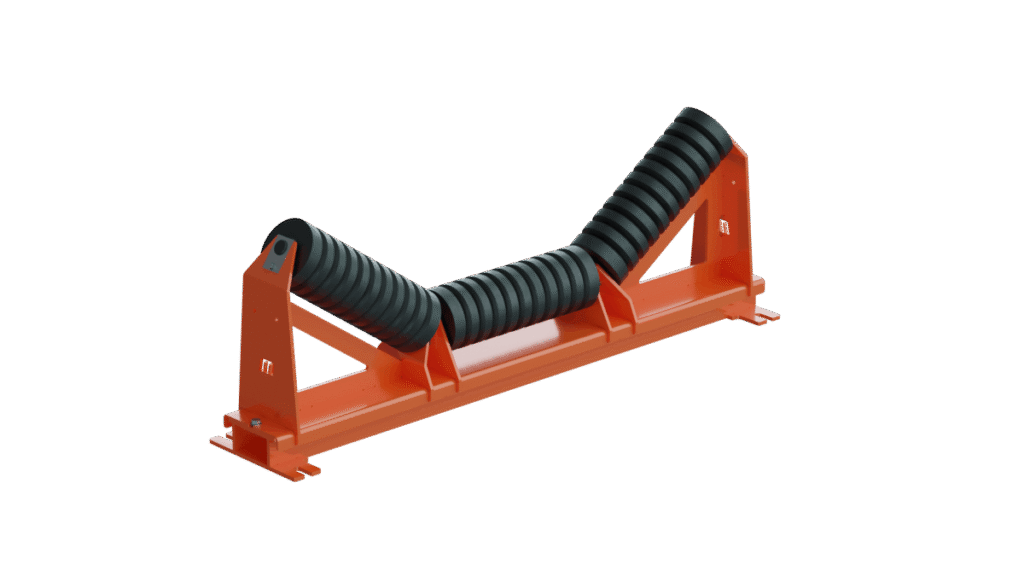
A carrying idler supports the loaded conveyor belt along the conveying path. It helps maintain the belt profile and allows bulk materials to move smoothly between loading and discharge points. Therefore, selecting the right Carrying Rollers can improve belt support, reduce unnecessary friction and help maintain reliable conveyor operation.
For example, a Conveyor Roller supports the belt from below, while a Troughing Idler Set provides support across the belt width and helps contain bulk materials during conveying. However, the correct configuration depends on belt width, material load, operating speed and conveyor structure.
Additionally, engineers should consider bearing performance, roller alignment and operating conditions before selecting an idler. As a result, the conveyor can achieve consistent material movement with fewer interruptions.
Request For Quote
NEED A CUSTOM QUOTE?
Get the Right Price for Your
Conveyor Roller
Share Your Conveyor Roller Requirements With Us and Get the Best Price, Tailored to Your Needs. Our Team Will Respond Quickly With a Competitive Quote.
Conveyor Roller Types and Their Uses
Carrying Roller
A Carrying Roller supports the conveyor belt and its conveyed material. Engineers select its diameter, face length, shaft and bearing arrangement according to the required load and conveyor dimensions.
Conveyor Idler Set
A Conveyor Idler Set supports the belt across its width. A troughing arrangement helps contain bulk materials, while a flat arrangement may suit specific light-duty or unit-handling applications.
MS Conveyor Roller
An MS Conveyor Roller can suit many general industrial applications. However, the designer must account for corrosion, moisture and the operating environment when selecting the material and surface finish.
HDPE Roller
An HDPE Roller may suit applications that benefit from a lightweight roller body and corrosion resistance. Nevertheless, the designer should verify its load capacity, temperature limits and bearing arrangement before installation.
Impact Rollers
At loading points, Impact Rollers help absorb material impact and protect the conveyor belt. They serve a different purpose from standard carrying idlers, so engineers should install them where loading conditions require additional impact protection.
Technical Specifications
| Roller diameter (mm) | 50–159 |
| Roller face length (mm) | 200–1600 |
| Shaft diameter (mm) | 12–30 |
| Shell thickness (mm) | 2–5 |
| Roller spacing (mm) | 500–1500 |
| Belt speed (m/s) | 0.5–3.5 |
| Operating temperature (°C) | -10–80 |
Calculator
Conveyor Roller Maintenance
Regular inspections help identify wear before it causes belt damage or unplanned downtime. In addition, maintenance teams should follow the equipment manufacturer’s inspection intervals and isolation procedures.
Inspect roller rotation: Check for seized, stiff or noisy rollers. Replace defective components before they damage the belt.
Check alignment: Confirm that idlers sit squarely within their frames. Misalignment can cause belt tracking problems and uneven wear.
Inspect bearings and seals: Look for contamination, overheating, unusual noise and lubricant leakage where applicable.
Check the roller shell: Identify dents, cracks, corrosion and material build-up. Clean deposits using an approved procedure.
Inspect mounting hardware: Check brackets, fasteners and frames for looseness, distortion or damage.
Record recurring faults: Track failures by conveyor location and operating conditions. This information helps maintenance teams identify repeated causes.
Follow safe isolation procedures: Stop and isolate the conveyor before hands-on inspection or repair. Never reach into a moving conveyor.
Conveyor Roller Applications
Carrying idlers support loaded conveyor belts in many bulk-material handling systems. Their design and arrangement should match the material, conveyor geometry and operating conditions.
Mining: Supports belts carrying ore, coal and other bulk materials.
Stone crushing: Helps support aggregate and crushed stone along conveyor routes. For demanding loading zones, engineers may also consider
.
Cement plants: Supports material transfer between processing and storage areas.
Power plants: Carries coal and other bulk materials where the conveyor design permits.
Warehousing and manufacturing: Supports conveyor belts used for suitable packaged or bulk products.
Ports and bulk terminals: Supports continuous material movement under specified environmental and loading conditions.
How to Choose the Right Conveyor Roller
The correct selection starts with the conveyor’s operating requirements. Therefore, check the following factors before finalising the design.
Belt width: Choose a roller face length and idler arrangement that support the belt adequately across its width.
Material load: Calculate the expected material load per unit length. Then consider uneven loading and the load distribution across individual rollers.
Belt speed: Higher speeds increase rotational demand. Consequently, check bearing speed ratings, balance and seal performance.
Roller diameter: A suitable diameter helps meet rotational-speed and load requirements. However, the diameter alone does not determine load capacity.
Bearing and shaft: Check radial load, shaft deflection, bearing life and sealing against dust or moisture.
Idler arrangement: Select flat or troughing support according to the belt profile and material-handling requirements.
Environment: Consider temperature, abrasive dust, moisture and corrosion before selecting the roller material.
Roller spacing: Set the spacing to prevent excessive belt sag under the expected load. Also, check the belt manufacturer’s recommendations and applicable conveyor design standards.
Troubleshooting
Roller Not Rotating
Isolate the conveyor, inspect the bearing and seals, and replace the defective assembly.
Excessive Noise
Check for bearing wear, contamination, looseness or misalignment.
Belt moves to one side
Inspect idler alignment, conveyor structure, loading distribution and belt tracking.
Uneven roller wear
Check material distribution, belt contact and roller alignment.
Material builds up on rollers
Identify the source of carryback and improve the appropriate cleaning arrangement.
Request For Quote
NEED A CUSTOM QUOTE?
Get the Right Price for Your
Conveyor Roller
Share Your Conveyor Roller Requirements With Us and Get the Best Price, Tailored to Your Needs. Our Team Will Respond Quickly With a Competitive Quote.
FAQ
What is a carrying idler?
A carrying idler supports the loaded side of a conveyor belt as it transports material. It may use a single roller or several rollers arranged to suit the belt profile.
What is the difference between a carrying roller and a carrying idler?
A carrying roller is an individual rotating component. A carrying idler can refer to the roller itself or the complete support assembly, depending on the terminology used by the conveyor manufacturer.
How does roller spacing affect belt performance?
Excessive spacing can increase belt sag and stress between support points. Conversely, closer spacing can improve support but increases the number of rollers and maintenance points. Therefore, engineers should select spacing according to belt stiffness, material load and the applicable design requirements.
Which material is suitable for carrying idlers?
Steel rollers often suit general industrial applications, while HDPE rollers may suit selected lightweight or corrosion-sensitive applications. However, engineers must compare load capacity, temperature, abrasion resistance and bearing design before making the final choice.
When should a carrying idler be replaced?
Replace an idler when it seizes, develops excessive noise or play, suffers structural damage, overheats, or no longer meets the required operating condition. Also, investigate repeated failures to identify the underlying cause.
Can carrying idlers handle heavy bulk materials?
Yes, if engineers select and verify the roller, shaft, bearings, frame and spacing for the actual operating load. A general dimensional range alone does not establish heavy-duty capacity.