- Global Supply | Worldwide Delivery

Jagruti Rubber Enterprises Pvt. Ltd. is associated with the manufacture and supply of conveyor belts, rubber products, conveyor systems, and conveyor accessories. The company is based in Ahmedabad, Gujarat, and public industry listings describe its product range across industrial conveyor and rubber applications.
For material handling systems, the conveyor belt must be selected according to the conveyed material, belt speed, temperature, load, conveyor layout, and operating environment. Therefore, technical requirements should be evaluated before a belt or conveyor component is specified.
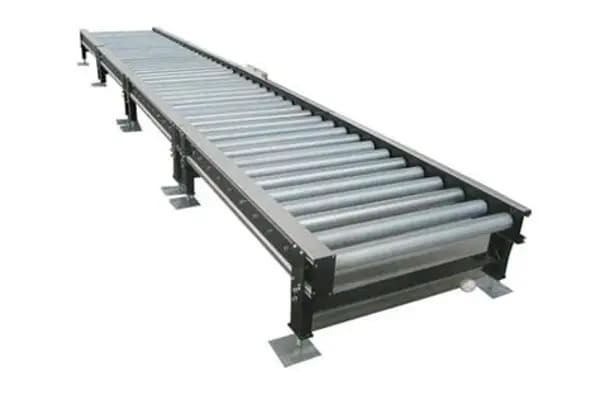
Share Your Conveyor Roller Requirements With Us and Get the Best Price, Tailored to Your Needs. Our Team Will Respond Quickly With a Competitive Quote.
Conveyor rollers are used to support and guide the conveyor belt while it moves material through the conveying system. They can be selected according to conveyor width, belt load, operating speed, material condition, and installation arrangement.
Carrying rollers support the loaded side of the conveyor belt. They are generally installed in the carrying section and can be arranged as flat or troughing idlers depending on the conveyor design.
Return rollers support the empty belt on its return path. Proper roller alignment helps maintain belt tracking and reduces unnecessary friction during operation.
Impact rollers are installed below loading points where material falls onto the conveyor belt. Their construction is intended to absorb impact and reduce the direct shock transferred to the belt and supporting structure.
Troughing rollers support the belt in a formed trough. This arrangement helps retain bulk material on the belt and is commonly used for bulk-material conveying applications.
01. Roller Type: Carrying, return, impact, guide and troughing rollers are available for conveyor systems with belt widths of approximately 400–2400 mm and roller diameters of 63.5–219 mm.
02. Roller Diameter: Typical roller diameters range from 63.5–219 mm. Common sizes include 76, 89, 108, 114, 127, 133, 159 and 194 mm.
03. Shaft Diameter: Roller shaft diameters commonly range from 20–60 mm. Typical shaft sizes include 20, 25, 30, 35, 40, 45, 50 and 60 mm.
04. Roller Length: Roller face lengths generally range from 250–1800 mm. The selected length depends on belt width, trough configuration and mounting arrangement.
05. Load Capacity: Typical roller load capacity ranges from 50–1500 kg per roller. Heavy-duty impact rollers can be designed for higher loads according to conveyor loading conditions.
06. Bearing Arrangement: Common bearing sizes include 6204, 6205, 6206, 6207, 6208, 6209, 6210, 6308, 6309 and 6310 series. Bearing selection depends on load and rotational speed.
07. Roller Material: Carbon steel rollers commonly use mild steel or fabricated steel tubes with approximately 3–12 mm wall thickness. Stainless steel and polymer options are also available for specific applications.
08. Operating Speed: Conveyor belt speeds commonly range from 0.5–6 m/s. Roller rotational speed varies with roller diameter and belt speed and may typically range from 50–1200 RPM.
09. Conveyor Arrangement: Troughing idlers commonly use 3-roll configurations with trough angles of 20°, 30°, 35° or 45°. Return arrangements generally use single rollers with spacing of approximately 1.5–3.0 m.
10. Operating Environment: Standard conveyor rollers may operate from approximately -20°C to +80°C. High-temperature designs can be specified for temperatures up to approximately 120°C, depending on bearings, seals and materials.
Selecting the correct conveyor roller starts with the conveyor operating conditions. First, identify the material being conveyed and determine its weight, size, abrasiveness, and loading pattern. Then, check the belt width and conveyor configuration.
The following factors should be considered before a roller is selected:
Roller length should match the conveyor frame and belt width. Adequate clearance should also be maintained at both ends. Therefore, the roller should be selected according to the actual conveyor dimensions.
The conveyed material determines the load applied to the rollers. Heavy materials require a suitable load-rated roller and supporting structure. In addition, impact loading should be considered when material is dropped from a height.
Roller diameter affects rotational speed, bearing speed, and load distribution. A larger diameter can reduce rotational speed at a given belt speed. Therefore, diameter should be selected together with belt speed and bearing requirements.
Belt speed affects roller RPM and bearing operation. Higher belt speeds result in higher roller rotation. Consequently, the bearing and sealing arrangement should be suitable for the expected operating speed.
Roller spacing should be selected according to belt width, material load, belt stiffness, and conveyor arrangement. Closer spacing can provide better belt support. However, the final spacing should be established from the conveyor design and loading conditions.
The roller material should match the operating environment. Steel rollers are commonly considered for industrial conveying, while stainless steel or polymer constructions may be selected where corrosion resistance or reduced weight is required.
Bearing selection should account for radial load, roller speed, dust, moisture, and temperature. Furthermore, effective sealing is important when rollers are exposed to abrasive dust or water.
Loading points can create higher forces than normal conveying sections. Therefore, impact rollers or other suitable supporting arrangements may be required below heavy loading zones.
Temperature, moisture, dust, chemicals, and outdoor exposure should be considered. For example, corrosive environments may require a more suitable roller material and protective arrangement.
The roller type must match its position in the conveyor. Carrying rollers support the loaded belt, while return rollers support the empty belt. In addition, guide and impact rollers may be used where specific operating conditions require additional support or belt control.
Conveyor rollers are used to support belts transporting coal, ore, minerals, and other bulk materials. Because mining applications can involve heavy loads and abrasive material, roller construction and bearing protection should be selected carefully.
Stone and aggregate handling can produce high impact and dust levels. Therefore, suitable carrying and impact rollers are used to support the belt and manage loading-zone forces.
Conveyor rollers are used for transporting limestone, clinker, gypsum, coal, and other raw materials. In addition, sealed bearing arrangements can be considered where the conveyor operates in dusty conditions.
Coal and other bulk materials are commonly transported through conveyor systems in power-generation facilities. Consequently, rollers are required on both carrying and return sections of the conveyor.
Steel plants use conveyors for handling raw materials, finished products, and process materials. Depending on the application, rollers may be exposed to heavy loads, dust, heat, or abrasive material.
Crushed stone, sand, gravel, and other aggregates are commonly moved using belt conveyors. Since these materials can be abrasive, roller selection should account for continuous material contact and loading impact.
Bulk materials can be transported between storage areas, processing systems, and loading facilities. Therefore, conveyor rollers are used to maintain belt support over long conveying distances.
Rollers are also used in material-handling systems for boxes, packages, and unit loads. In these applications, roller diameter, surface condition, load capacity, and conveyor speed should be matched with the transported products.
Where hygiene and corrosion resistance are important, suitable roller materials and surface finishes should be considered. Stainless steel or other application-specific constructions may be selected where required.
Fertilizer and chemical materials can create corrosive or dusty operating conditions. As a result, roller materials, bearings, seals, and protective finishes should be selected according to the actual environment.
Conveyor rollers are also used in manufacturing plants, material storage areas, packaging systems, and other industrial conveying applications. The roller arrangement is normally determined from the belt design and material-handling requirement.
Belt mistracking can be caused by incorrect roller alignment, uneven loading, pulley alignment problems, or material buildup.
First, check whether the belt is being loaded centrally. Then inspect the carrying and return rollers. If the structure is misaligned, the underlying alignment problem should be corrected rather than simply increasing belt tension.
Belt slip can occur when there is insufficient traction between the belt and drive pulley. Moisture, material buildup, inadequate tension, or drive-related problems can contribute to this condition.
Therefore, the drive area should be inspected before changing the belt tension significantly.
Rapid wear can be caused by abrasive material, excessive impact, incorrect loading, belt mistracking, or unsuitable cover selection.
In such cases, the wear pattern should be examined. A consistent wear pattern can help identify whether the problem is caused by the material, loading point, rollers, pulley, or belt alignment.
A belt joint can fail when the joining method is unsuitable, the joint is poorly prepared, or excessive stress is applied during operation.
The failed area should therefore be inspected carefully. The belt construction, jointing method, tension, and conveyor alignment should all be reviewed before the belt is returned to service.
Noise may be produced by damaged bearings, seized rollers, belt rubbing, pulley problems, or loose conveyor components.
First, isolate the source of the noise. Then inspect the rotating components individually. A damaged roller or bearing should be replaced rather than allowed to continue operating.
Share Your Conveyor Roller Requirements With Us and Get the Best Price, Tailored to Your Needs. Our Team Will Respond Quickly With a Competitive Quote.
Jagruti Rubber Enterprises Pvt. Ltd. is an industrial company associated in public industry listings with conveyor belts, rubber products, conveyor systems, and conveyor accessories. It is listed in Ahmedabad, Gujarat.
Public listings describe conveyor belts, special-purpose belts, power transmission belts, rubber sheets, coated fabrics, conveyor systems, and conveyor accessories among its product categories.
Material type, belt width, conveyor capacity, belt speed, temperature, abrasion, impact, moisture, loading conditions, conveyor inclination, and jointing requirements should be evaluated.
No. Abrasive materials can cause accelerated cover wear. Therefore, a belt with a suitable abrasion-resistant construction should be considered for applications involving abrasive materials.
Yes, suitable heat-resistant belt constructions can be used for hot-material applications. However, the actual material temperature and exposure duration should be considered before the belt is specified.
Mistracking can result from roller misalignment, pulley misalignment, uneven loading, belt tension problems, material buildup, or structural alignment issues.